
The window faults we repair
JM Glass & Glazing are glaziers based at 24 Waddon Close in Croydon CR0 4JT. We repair handles, hinges, locks, seals and draughty windows across South London and Surrey, rather than replacing the whole window.
Window repair means fixing the moving parts of a window that has stopped working properly (the hinges, the handles, the locks and the seals), instead of replacing the whole thing. It's what you need if a window sticks, drops on its hinge, won't lock, or lets a draught through. We do it across Croydon, South London and Surrey, usually in one visit.
What actually goes wrong with a window
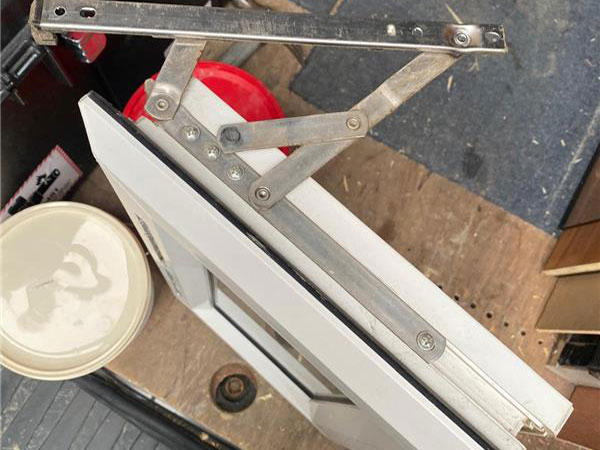
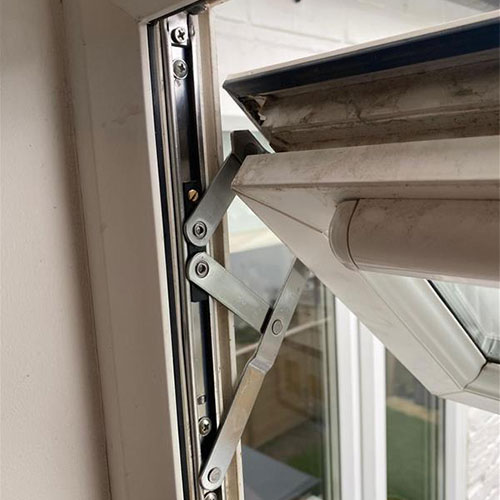
Nine times out of ten the glass and the frame are sound and the hardware has worn out. uPVC and aluminium casements run on friction stays: the sliding arm hinges hidden inside the frame. They corrode, the arm stiffens, and the sash starts catching every time you shut it. Handles fail at the gearbox, so the handle turns but the cams inside never move. On a timber sash, a cord snaps and the window won't stay up. None of that is a reason to buy a new window.
The repairs we carry out most
- Friction stays: the hinges on a uPVC or aluminium casement. Corroded or snapped arms are why a window drops, catches or won't sit flush. Replaced in pairs, sized by length and stack height.
- Handles: espagnolette, cockspur and tele-flex. Snapped bases, worn spindles and seized cockspur noses. Older aluminium tele-flex handles have to be pattern-matched.
- Espag locks and gearboxes: the strip of cams running down the sash. If the handle turns freely and nothing locks, it's the gearbox, not the handle.
- Draughts, nearly always a flattened gasket or a keep that has drifted out of adjustment, not a problem with the glass.
- Dropped and jammed sashes: the glass lifted out, re-packed, toed and heeled, so the sash squares up and shuts under its own weight.
- Timber sash windows: snapped sash cords, seized pulleys, split parting and staff beads, and brush seals for the rattle and the draught.
- Steel Crittall frames, the 1930s windows in a lot of the semis round here. Eased, re-hung and re-puttied rather than ripped out.
- Misted glass. If the pane has gone cloudy the hardware is fine and only the sealed unit needs changing. That's double glazed unit replacement.
Most window firms won't do this work
That's a real thing and it's worth knowing why. An installer makes their money selling and fitting new frames. A repair is an hour on site, a small part and no follow-on sale, so plenty of firms quote for a replacement window instead, or tell you the part is obsolete without measuring it. Repairing is usually a fraction of the cost of a new window, and on a frame that's otherwise sound it's simply the right answer. Jason Marchant has spent his working life in the glazing trade and would rather fix a window than sell you one.
Where we work
We're based at 24 Waddon Close in Croydon and most repair work sits within about half an hour of there. The 1930s and 1950s semis in Purley and Coulsdon are the bread and butter: uPVC casements fitted in the 1990s whose friction stays and espags are all failing at the same age. We also cover South Croydon, Sanderstead, Selsdon, Shirley, Kenley, Sutton, Banstead, Caterham, Beckenham, Bromley, West Wickham, Streatham and Wimbledon.
Nobody can price a window repair honestly over the phone, because the cost sits almost entirely in the part and the access, not the labour. Most casement repairs are short work once we're up the ladder. What moves the number is whether the part is still made and whether we can reach the window safely.
What drives the price
- Whether the part is still made. Hardware from the common brands (Yale, Maco, Cotswold, Securistyle, Mila, Avocet), made in the last twenty years is stock and cheap. An obsolete aluminium tele-flex handle, or an espag with unusual cam centres, has to be pattern-matched, and that can mean a second visit.
- How many windows. Doing every friction stay in a house on one visit costs far less per window than calling us back three times.
- Access. A ground-floor window off a ladder is straightforward. A second-floor window sitting over a conservatory or a flat roof can need a tower, and that changes the day.
- Whether the glass has to come out. Re-packing a dropped sash means beads off, glass out, toed and heeled, glass back in. More labour than a hinge swap, still nowhere near the cost of a new window.
- Timber against uPVC. Sash cord work is measured in half-days. Beads have to come out cleanly, weights get re-tied to the right balance, and everything is eased before it goes back.
- Out of hours. An emergency call-out costs more than a booked morning slot. If the window is broken rather than jammed, that's emergency glazing and a different job.
How long it takes
A handle or a pair of friction stays is twenty to forty minutes on one window. A full house of hinges is normally a morning. Espag and gearbox swaps depend on sourcing: same day when the size is common, a return visit when it isn't. Sash cords run to roughly half a day per window, because the beads and the weights have to come out and go back properly.
What happens on the day
We measure before we buy anything. Friction stays are sized by length and stack height, espags by backset, cam centres and handle height, cockspur handles by the depth of the nose. Get one of those wrong and the window won't shut, so the old part comes off, gets measured, and is matched like for like. Common sizes ride on the van, so a lot of jobs are done there and then. Everything is adjusted and tested before we leave, with the keeps set so the sash pulls onto the gasket without needing a shove.
When replacing is the honest answer
Sometimes a repair is throwing good money after bad, and we'll say so. A bowed uPVC sash, split welds at the corners, a timber sill rotted through, or steel that has rusted and jacked the surrounding mortar. Those are frame problems, not hardware problems. Glass is a separate question again: a cracked pane is glass replacement, not a repair. We stand behind what we fix, and we come back if something isn't right.
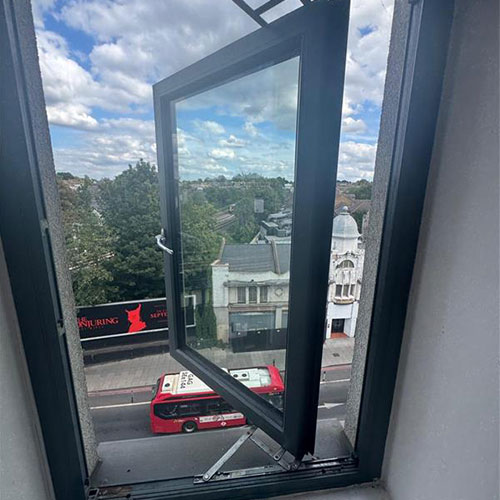
Window Repairs across South London and Surrey
We provide window repairs throughout the areas below and everywhere in between. See our full areas covered page.
Frequently Asked Questions
We won't quote a figure without seeing it, because the part decides most of the cost. A common friction stay or handle is inexpensive and the visit is short. An obsolete part that has to be pattern-matched, or a window that needs a tower to reach, costs more. Send a photo of the handle or hinge on WhatsApp and we can usually tell you which it is.
Almost always, and by a wide margin. Replacing a casement means a new frame, new glass, fitting and making good afterwards. A repair is one part and an hour. On a frame that's sound, with glass that's still clear, the only thing wrong is the hardware, and hardware is the cheapest part of a window to change.
That's the gearbox inside the espagnolette lock, not the handle. The handle drives a spindle into the gearbox, which pushes the locking cams up and down the sash. When the gearbox strips, the handle spins freely and the cams stay put. The whole espag strip is usually replaced, measured by backset, cam centres and length.
Usually. Cockspur handles are matched by the depth of the spur, which is why two that look identical often won't both work. Tele-flex and older aluminium handles from the 1970s and 80s are harder. Some are out of production and have to be matched to a pattern rather than a part number. We take the old one off and measure it.
Yes. Snapped sash cords are the usual call. If one cord has gone the others are the same age, so we normally do both cords on that sash while the beads are off. We also free seized pulleys, replace split parting and staff beads, and fit brush seals to stop the rattle and cut the draught.
Yes, and it rarely involves the glass. A draught round a closed casement is normally a gasket that has flattened with age, or a keep on the frame that has drifted so the sash no longer pulls tight. New gasket, keeps reset, and the window compresses properly again. On timber sashes it's brush seals and beads.
Often, yes. We're in Croydon and most repair work is within half an hour of the workshop, so a booked morning or afternoon slot is usually available quickly. We aim to make a property safe the same day where we can. If the window is smashed rather than stuck, say so when you call and we'll treat it as an emergency.
Misting is a failed sealed unit rather than a hardware fault, so it's a separate job. The unit is measured, made and swapped into the existing frame, which is normally a short visit. If a window is both misted and stiff we'll sort both on the same call, so it's worth mentioning when you book.