
What shop front glass replacement covers
JM Glass & Glazing are glaziers based at 24 Waddon Close in Croydon CR0 4JT. We replace shop front glass and make commercial premises secure across South London and Surrey, with as little downtime as we can manage.
Shop front glass replacement is taking the glass out of a commercial frontage and putting new glass back in: the big fixed display panes, the toughened entrance door, the side screens and the glazing in an office or restaurant facade. It is nearly always two visits rather than one. Almost nothing at shopfront size sits on a shelf, because every pane is toughened or laminated to that exact opening, so the glass can only be ordered once it has been measured. The first visit makes the premises secure. The second puts the permanent glass in.
Most calls come after a break-in, a delivery trolley through a door pane or a vehicle reversing into a frontage. If the glass has gone, the board-up comes first. We cut the remaining glass out of the rebate, and laminated has to be cut away rather than knocked out because it hangs on in sharp sheets, then screw 18mm ply into the frame or clamp it where the frame cannot be drilled. That is what lets a shop lock up, trade behind a hoarding, and show an insurer the premises were made secure. We aim to make a property safe the same day where we can, and that side of it sits on our emergency glazing page.
Toughened, laminated, or a sealed unit
Toughened is the default for a shop front. Annealed glass is heated to around 620°C and cooled fast, which puts the surface into compression and leaves it four to five times stronger than ordinary glass of the same thickness. If it does go, it drops as blunt granules rather than blades. The catch is that it cannot be cut, drilled or notched after the furnace, so every hole for a lock, handle, patch fitting or floor spring has to be specified before it is made. That is why a careful survey beats a quick one.
Laminated is the security answer. Two or more panes are bonded either side of a plastic interlayer, usually 0.38mm, 0.76mm or 1.52mm thick, and when it is hit it cracks but holds in the frame. Getting through it means hitting the same spot repeatedly, for a long time, loudly. Laminated is graded for resistance to manual attack under BS EN 356. Toughened laminated gives you both properties, costs more and takes longer to make.
- 6mm toughened: internal screens, small panes, low-level side lights, cabinet and counter glass.
- 10mm and 12mm toughened, large fixed display panes and frameless entrance doors on patch fittings and a floor spring. 12mm for anything tall or heavily used.
- 6.4mm, 8.8mm and 11.5mm laminated. Where security matters or the glass is overhead. The number is the make-up: 8.8mm is 4mm plus a 0.76mm interlayer plus 4mm.
- Toughened laminated, 11.5mm or 13.5mm: repeat-target premises. Jewellers, pharmacies, off-licences, phone shops, anywhere that has been hit twice.
- Sealed units, commonly 24mm or 28mm: 4-16-4 or 6-16-6 with a low-emissivity coating, for offices, restaurants and anywhere heated. Both panes toughened, not just the outer one.
- Low-iron glass, ordinary float carries a green edge tint that shows badly on a thick pane against a white display. Low-iron costs more and reads properly clear.
Manifestation is the marking that stops people walking into a glass door or screen. Approved Document K of the Building Regulations expects large uninterrupted areas of glazing in a commercial building to be made apparent, and the usual way that is met is a band or pattern at two heights: 850mm to 1000mm from the floor, and again at 1400mm to 1600mm. Etched vinyl, a frosted band, a dot pattern or your own logo cut from film all qualify. It has to contrast with whatever sits behind the glass, so check it against the real view out, not a sample on a desk.
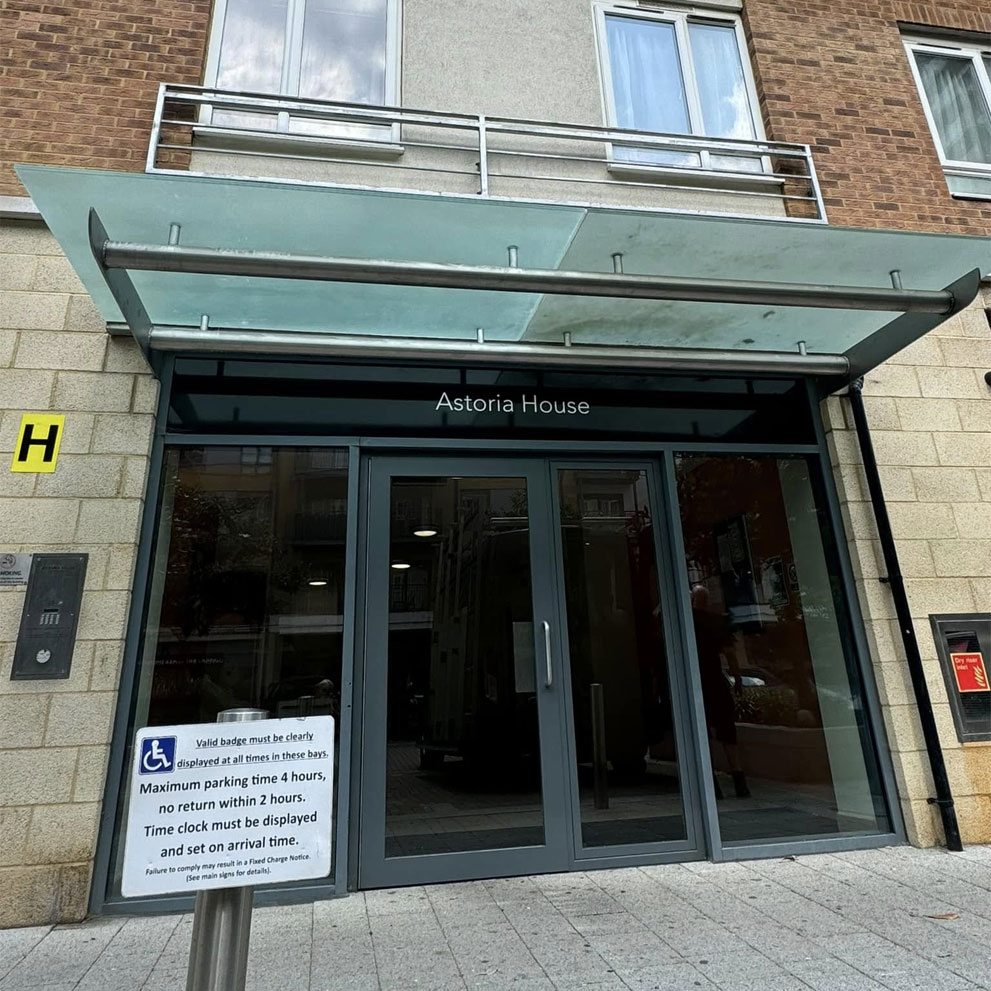
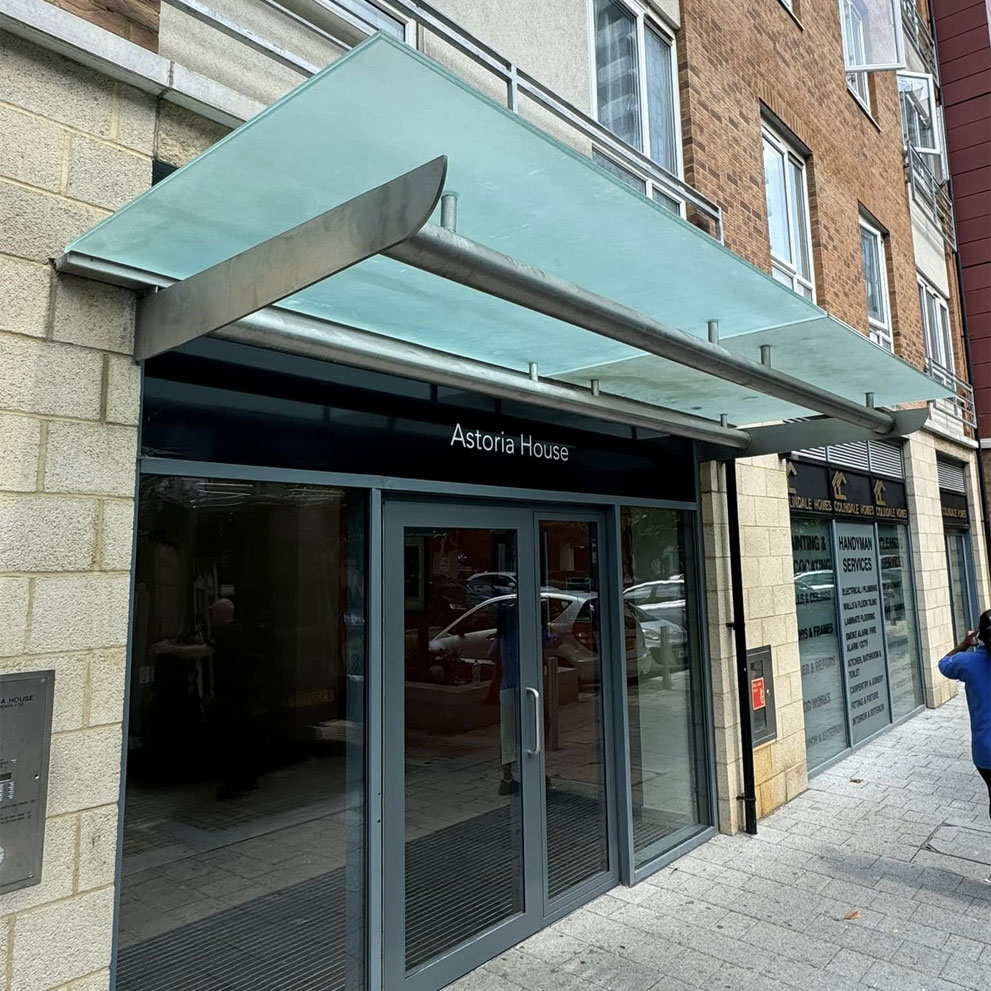
What actually drives the price
Nobody can price a shop front pane over the phone without a size and a specification. Here is what the figure is actually made of, so you can tell a fair quote from an invented one.
- Specification. Toughened is the baseline. Laminated costs more at the same thickness, toughened laminated more again, and a sealed unit is two panes plus a spacer bar, so it lands above any single pane.
- Size, and one particular step in it. Glass is priced by the square metre, but there is a jump once a pane has to be cut from an oversize sheet. A pane that leaves a lot of offcut carries the waste as well as the glass.
- Weight and access. Glass runs about 2.5kg per square metre for every millimetre of thickness, so 10mm is 25kg a square metre and a 3m by 2m pane in it weighs roughly 150kg. Past a two-man lift you are into suction lifters, more men on site, and sometimes a licence to work off the footway.
- Processing. Polished edges, holes for handles and locks, notches for patch fittings and cut-outs all happen before toughening. Each adds cost and lead time.
- The frame. A break-in often bends the aluminium, splits a bead or wrecks a gasket. On 1960s and 1970s parades the section is frequently obsolete, and that is where the money goes, not on the glass.
- When you want it fitted. A 6am start or a Sunday costs more than a Tuesday morning. Most work out that is still cheaper than closing.
- Manifestation and film. A plain frosted band is inexpensive. A logo cut from film, or full printed graphics, is a separate line.
Lead times, and fitting outside trading hours
Toughened glass is made to order, so nothing is instant. A plain toughened pane with no processing is usually a few working days from the survey. Laminated, toughened laminated, sealed units and anything with cut-outs take longer. That gap is why the board-up matters: it lets the shop trade, or at least lock up, while the glass is being made. Fitting a single pane into a sound frame is often an hour or two once it is on site. We fit before opening or after closing wherever the job allows, so a frontage on North End in Croydon or on Purley High Street does not lose a trading day.
Landlords, agents and older frontages
We work for landlords, managing agents and insurers as much as for the shops themselves. Agents with parades across CR0, CR2, CR8 and the SM postcodes tend to want the same four things: a keyholder let-in, photographs of the make-safe and of the finished pane, one invoice per property, and the pane sizes recorded so the next one is quicker. Insurers want the same photographs and a clear split between the make-safe and the permanent glazing. We write it up that way as standard.
One honest word on older parades. The Central Croydon and Church Street conservation areas cover the Old Town and civic core, Sutton High Street has been a Historic England Heritage Action Zone since 2017, and the 1880s Godstone Road parade at Kenley sits under an Article 4 direction. In places like those, changing how a frontage looks (new framing, different proportions, one big pane where there were divisions), can need council consent. Like-for-like glass into an existing frame normally does not. We will tell you which of the two you have before you order. We are not registered to self-certify building work, so anything notifiable goes through building control.
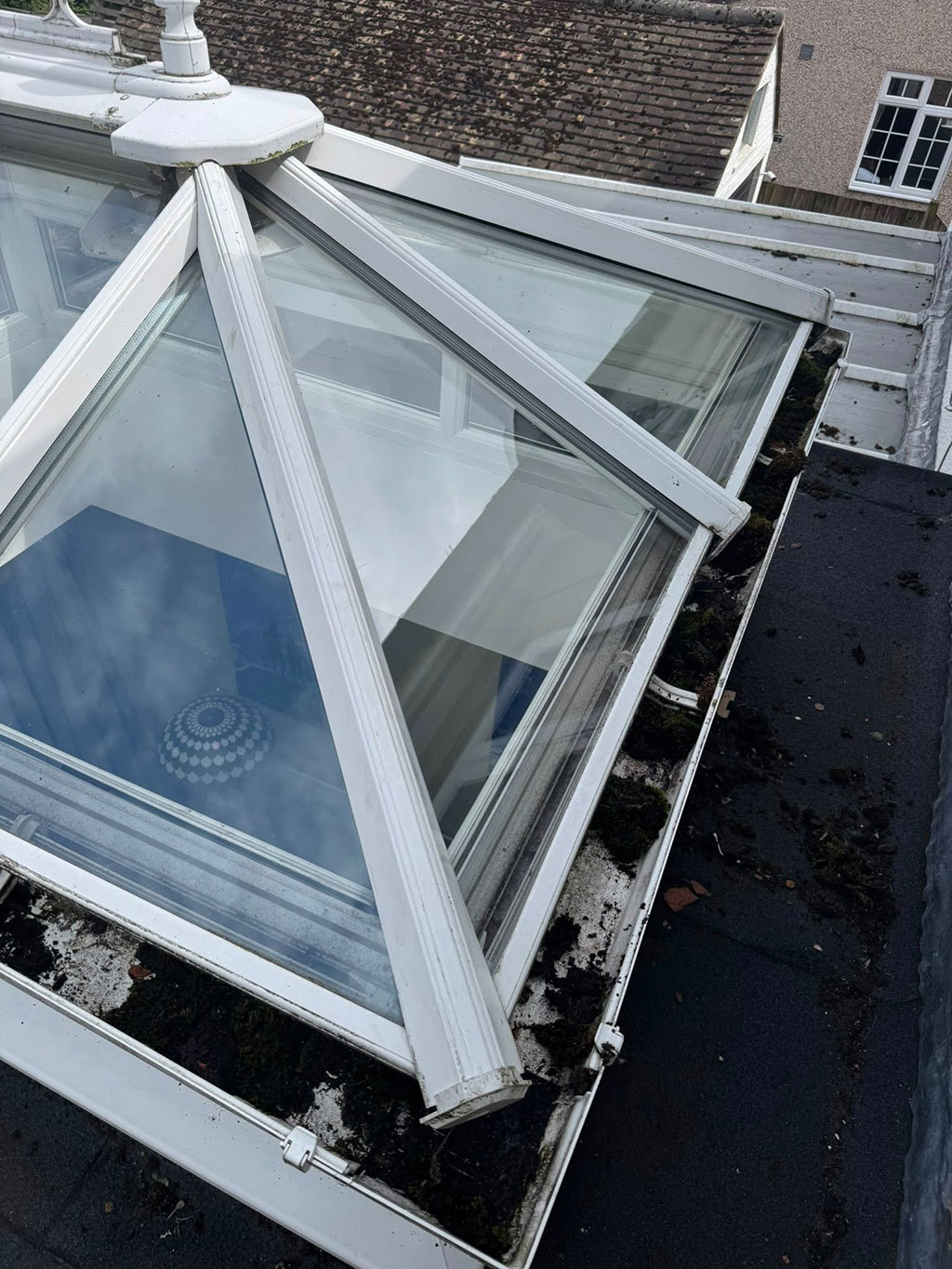
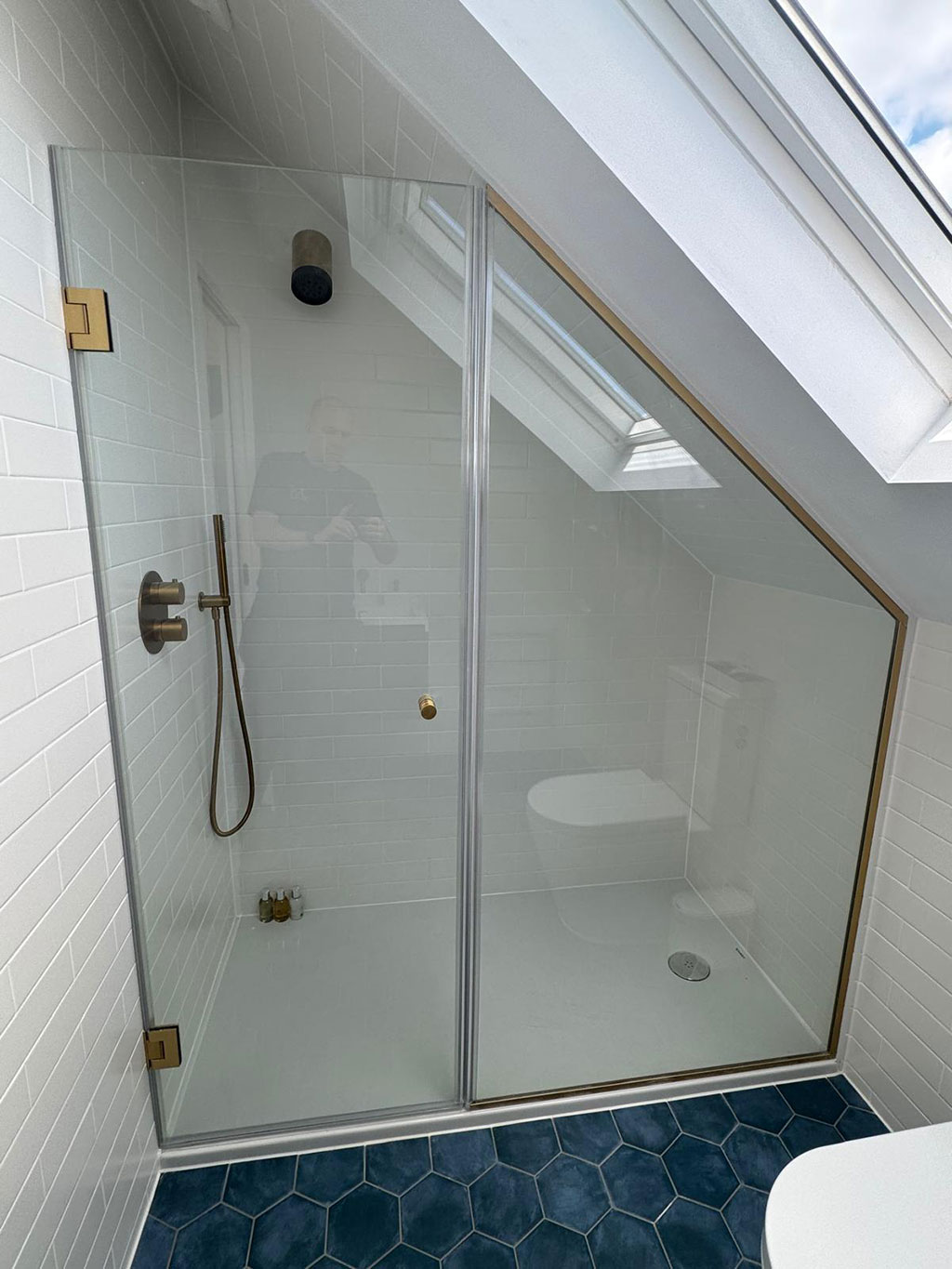
Shop Front Glass Replacement across South London and Surrey
We provide shop front glass replacement throughout the areas below and everywhere in between. See our full areas covered page.
Frequently Asked Questions
There is no honest single figure. The price is built from the specification, the size, the weight, any processing and the state of the frame. A small toughened door pane and a three-metre laminated display window are different jobs by a wide margin. We measure, price the glass and the labour separately, and tell you what the frame needs before you commit to anything.
We aim to make a property safe the same day where we can, and we take emergency call-outs outside office hours. Ring 07956 138 582 rather than emailing if it has just happened, because the mobile is the one that gets answered. Boarding up is a separate, smaller job from the glazing, and it buys the days the replacement glass needs to be made.
A plain toughened pane with no holes or notches is usually a few working days from the measure. Laminated, toughened laminated, sealed units and anything with cut-outs take longer, because every hole and notch has to be done before the glass is toughened. You get the lead time when we quote, not after you have ordered.
Toughened suits most frontages and is what goes in unless there is a reason not to. Laminated is worth the extra if you have been broken into before, if stock is small and valuable, or if the glass is overhead. Approved Document K also requires safety glass in critical locations: doors and their side panels up to 1500mm, and low-level glazing below 800mm.
If it is a commercial building with large uninterrupted glazing that people could walk into, Approved Document K expects its presence to be made apparent. In practice that means a band, pattern or logo at 850mm to 1000mm and again at 1400mm to 1600mm above floor level, in something that contrasts with the view through the glass. We can apply it when we fit the pane.
Yes, and for most shops that is the whole point. Early mornings before opening, evenings after closing and Sundays are all normal on commercial work. It costs a little more than a weekday fit and it is usually far cheaper than shutting for a day. Tell us your trading hours at the survey and we will work the fit around them.
Usually, yes. Aluminium shopfront sections on 1960s and 1970s parades are often out of production, so we either match what is there from what is still available, glaze it with the right gaskets and packers, or replace the section. We will tell you at the survey which of the three you are looking at and what it does to the price.
Two usual causes. Thermal stress, where sun heats the middle of a pane while the edges stay cold in the frame and a crack runs out from a nick in the edge. Or, in toughened glass, a tiny nickel sulphide inclusion that grows over years and shatters the whole pane at once. Heat-soak testing to BS EN 14179 screens most of those out, and it is worth asking for on a big pane.