
What a double glazed unit replacement actually is
JM Glass & Glazing are glaziers based at 24 Waddon Close in Croydon CR0 4JT. We replace misted and failed double glazed units across South London and Surrey, keeping your existing frames.
A double glazed unit is the glass part of a double glazed window. The trade calls it a sealed unit. Two panes are bonded either side of a hollow spacer bar, sealed all the way round the edge, with dry air or argon in the gap between them, and the whole thing sits in your frame behind the beads. Replacing one means taking that glass out and setting a new one in. The frame, the hinges, the handles and the sill stay exactly where they are. It is one of the highest-volume jobs we do, from Caterham down the A22 to the terraces of South London.
Why double glazing mists up
Condensation between the panes means the perimeter seal has failed. Every unit has two seals round the edge: an inner ribbon of butyl that holds the gas in, and an outer bead of polysulphide or hot-melt that does the structural work. Inside the spacer bar there is desiccant, small beads that absorb the tiny amount of moisture sealed in at the factory and keep the cavity dry. As the sun heats the unit each day and it cools again each night, the air in the cavity expands and contracts, and a tired seal lets damp air in and out on that cycle. The desiccant mops it up until it is saturated. After that the moisture condenses on the cold inner face of the outer pane, and that is the mist. Nothing reverses it. Drilling a unit, blowing it through and plugging the hole clears the haze for a while, but the cavity is then vented to outside air, the argon has gone and the seal is still broken. We replace the glass instead.
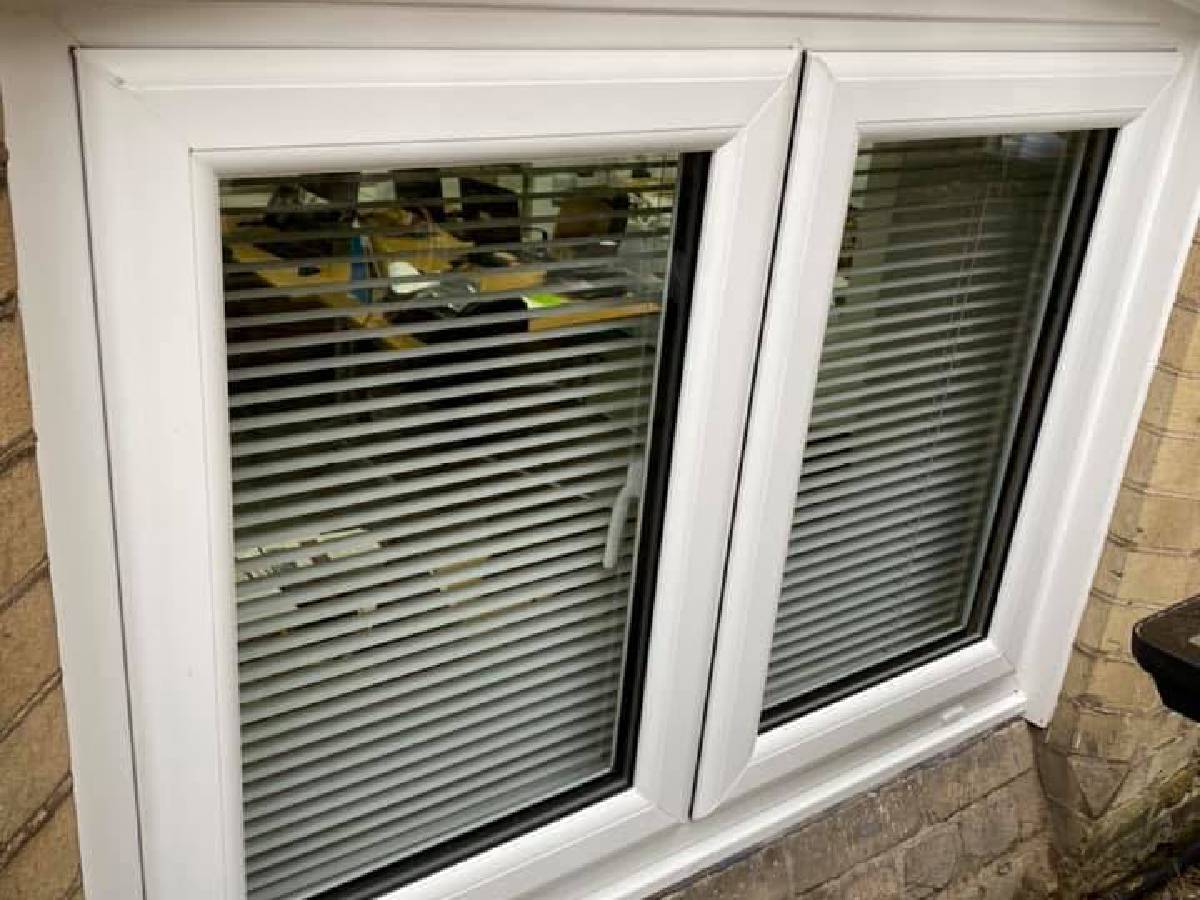

The frame almost always stays
Most of the time you do not need new windows. If the frame is square, the hinges work, the gaskets are soft and the drain slots are clear, only the glass has failed. Replacing it costs a fraction of a new window, it is done in one short visit, and there is no making good round the reveal, no new sill, no plastering. If we get the unit out and find rotten timber, a bowed uPVC section or hinges on their way out, we will tell you: that is window repair territory. One honest note, because it decides who you should call. Glass replaced inside a frame you already own is a repair. Replacing the whole window, frame and all, is controlled work under the Building Regulations, and we are not a self-certifying installer, so sign-off there goes through your council's building control rather than a certificate from us. For a misted unit that never arises.
How to tell it is the unit and not the window
- Mist or droplets you cannot wipe off. If the condensation is between the panes rather than on the room side, the seal has gone. Condensation on the inside face is a ventilation problem, not a glass one.
- A white tidemark or rainbow smear that comes and goes. That is trapped moisture drying and returning with the weather, and it etches the glass over time.
- The room feels colder by that window. The argon has escaped, and on a soft-coat low-E unit the damp eventually attacks the coating too.
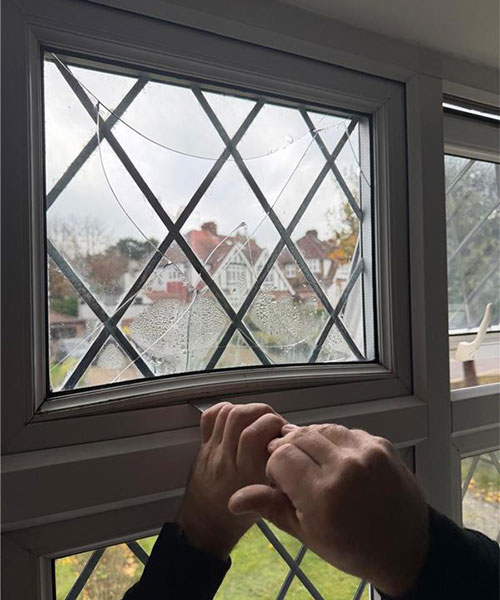
- A crack in one pane. You cannot change one pane of a sealed unit, so the whole unit is replaced. If it is smashed right through, that is an emergency glazier call first and a new unit afterwards.
Thicknesses, coatings and gas fills
Most domestic sealed units round here are 28mm overall (4mm glass, a 20mm cavity, 4mm glass), or 24mm, which is 4-16-4. Older uPVC and much aluminium takes 20mm. The rebate in your frame decides it: a 28mm unit will not go into a rebate cut for 24mm. So we measure the frame, not the glass we would like to sell you.
The spacer bar used to be aluminium, which conducts heat through the perimeter and gives you a cold edge. A warm-edge spacer in foam, thermoplastic or thin stainless composite lifts that edge temperature several degrees and takes about 0.1 W/m²K off the whole-window U-value. Low-E is a coating you cannot see: a microscopically thin metal oxide layer on the cavity face of the inner pane, letting sunlight in and reflecting the room's heat back. Argon fills the gap, roughly a third less conductive than air. Together they take a plain clear 4-16-4 unit from about 2.7 W/m²K down to around 1.1 centre-pane. Building Regulations ask 1.4 of a replacement window in an existing house, so that is what we quote as standard.
Slim heritage units for period windows
There is a unit made for original timber sashes and old leaded casements. Slim heritage units run 11mm to 14mm overall, thin enough to drop into the original rebate behind the existing beads without changing the sightline. The cavity is too narrow for argon, so they are krypton-filled, and you land near 1.6 W/m²K: short of a full 28mm unit, but far better than the 5.4 of single glazing, and the sash stays. That matters on the Webb Estate and Upper Woodcote Village in Purley. On a listed building, check with the council first.
What drives the price
We price off the measurements rather than publish a rate, because two units of the same size can differ by double. Here is what moves the number.
- Area, with a minimum. Priced by the square metre with a floor under it, so a small window costs nearly as much as a medium one.
- Specification. Clear annealed is the base. Low-E and argon add a little, toughened roughly doubles the glass cost, laminated more again.
- Safety glass where the law requires it. Below 800mm in a window, or below 1500mm in a door and 300mm either side, it has to be toughened or laminated.
- Shape. Anything that is not a rectangle needs a template taken on site. Arched heads, splayed bay corners and roof lights cost more than a square opening.
- Leaded or Georgian bars. Made by hand per unit, and matching an existing came width and pattern takes time.
- Access and quantity. Ground floor off a driveway is one price, a second-floor rear over a conservatory roof another. Six units in one visit cost less each than one on its own.
- Frame condition. Brittle beads, shrunken gaskets or blocked drainage all add work.
How the job runs
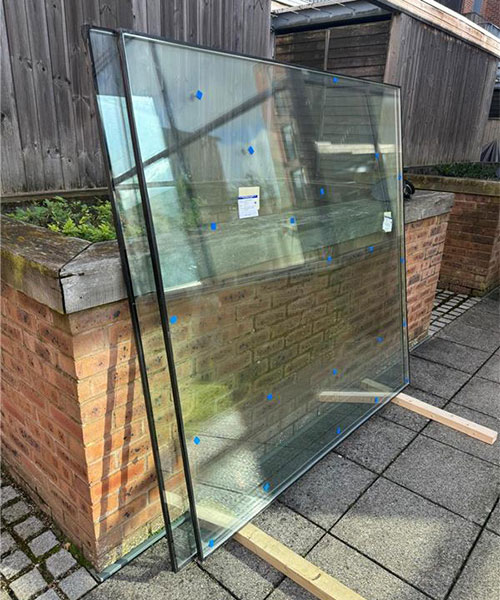
Two visits. We measure first, taking the failed unit out and measuring it off the bench where we can. We read the spacer bar while it is out, because most are stamped with the maker and the date of manufacture, which tells you the unit's age and your cavity. Everything is cut to order. Plain and low-E units come back quickly; toughened, laminated, shaped and leaded units take longer, and a discontinued obscure pattern is what most often holds a job up.
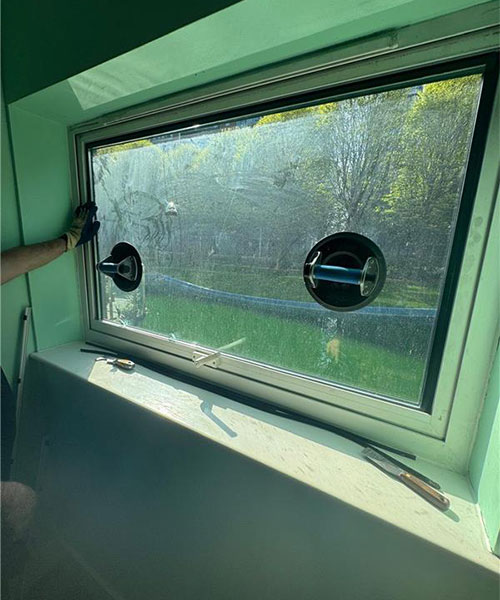
On fitting day the beads come out, the rebate is cleaned, and the new unit is set on packers: toe-and-heel on an opening casement, so the glass carries the sash square rather than the hinges taking the weight. That is why a dropped door often comes right once the glass is re-set. Reckon on twenty to forty minutes a unit, longer for a bay. Before we leave we clear the frame's drain slots, because water standing in the rebate is the fastest way to kill a new seal.
Before and after
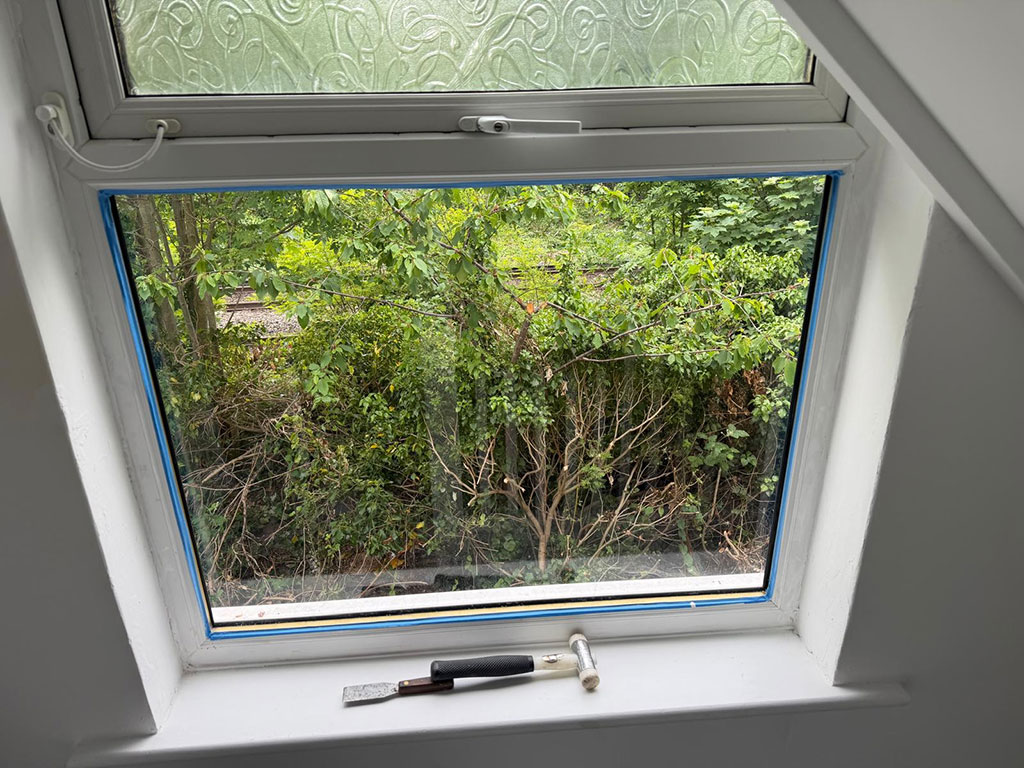
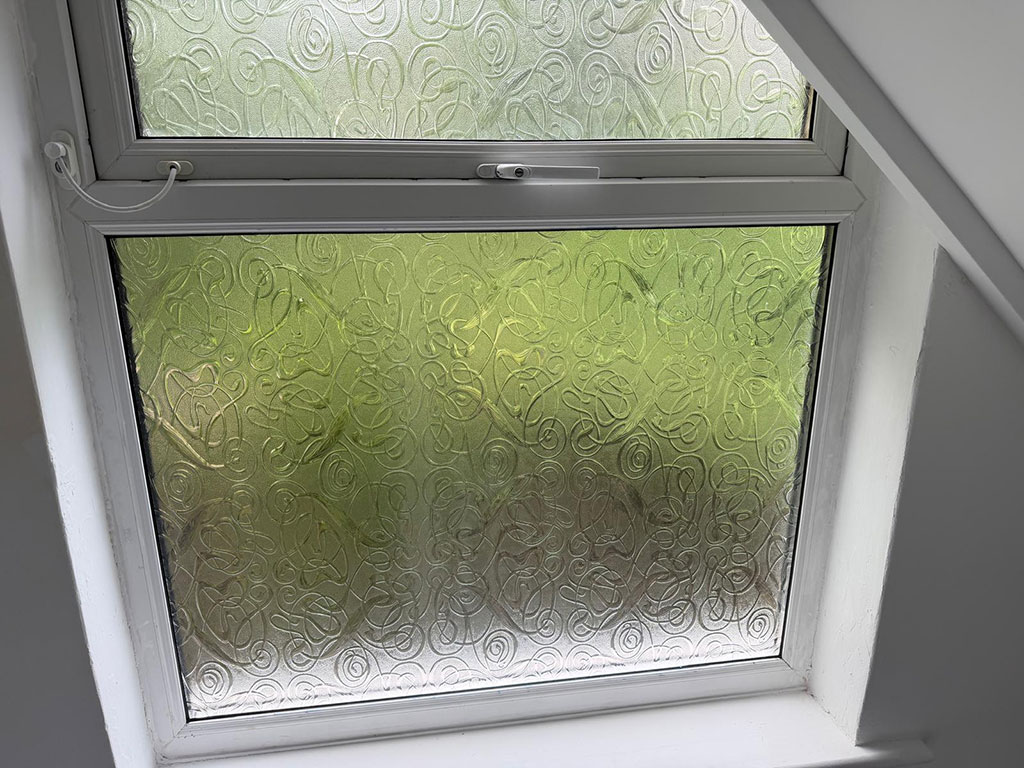

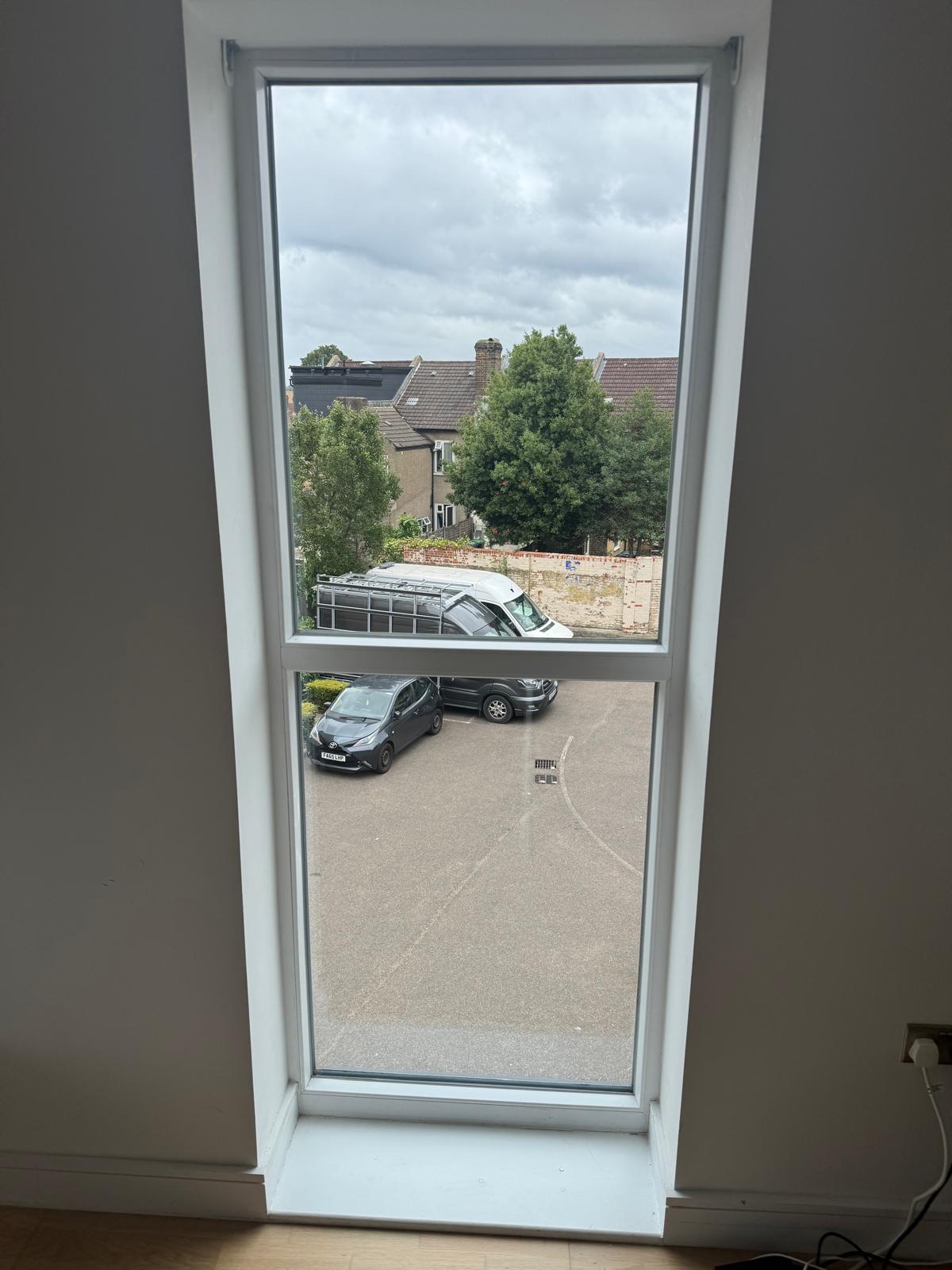


Double Glazed Unit Replacement across South London and Surrey
We provide double glazed unit replacement throughout the areas below and everywhere in between. See our full areas covered page.



Frequently Asked Questions
It has to be replaced. The mist is moisture inside a sealed cavity whose perimeter seal has failed, and there is no way to re-seal that in the frame. Drilling and venting a unit clears the fog for a while but leaves you with a broken seal, no argon and a cavity open to outside air. A new unit is the only proper fix.
Usually not. The part that has failed is the sealed unit, not the frame. If the frame is square, the hinges and handles work and the drainage is clear, we take the old glass out and fit a new unit into the frame you already have. It is quicker and cheaper than a new window, and it leaves your sills, plaster and decoration alone.
We price off the measurements rather than publish a rate, because size is only part of it. The cost is driven by the area of glass with a minimum per unit, the specification (clear, low-E, toughened, laminated or patterned), whether the position legally requires safety glass, the shape, leaded or Georgian bars, access, and how many units we do in one visit. Several together always works out cheaper each.
Two visits. We measure first, then the unit is made to order. Plain and low-E units come back quickly, while toughened, laminated, patterned, shaped and leaded units take longer, and a discontinued obscure pattern takes longest of all. Fitting is usually twenty to forty minutes a unit once we are in the room. A bay, a roof light or a leaded unit takes longer than that.
It depends where it sits. Glass in a critical location, meaning below 800mm from floor level in a window, or below 1500mm in a door and the 300mm either side of it, has to be toughened or laminated safety glass. That is not optional and we will not put annealed glass there. Everywhere else, standard annealed glass is fine unless you want the extra strength.
Usually. Current patterns like Cotswold, Stippolyte, Contora, Everglade and Satin are all still made and straightforward to match. Older and discontinued patterns are harder, and that is the most common reason a job waits. Send a photo taken close up against the light, or we will take one when we measure, and we will tell you honestly whether it can be matched.
Often, using a slim heritage unit. They are about 11mm to 14mm overall with a krypton-filled cavity, thin enough to sit in the original rebate behind the existing beads, so the sash and the sightline stay as they are. They run near 1.6 W/m²K rather than the 1.2 of a full-thickness unit, but the window still reads as original from the street. On a listed building, check with the council before anything is ordered.
No. Replacing the glass in a frame you already own is a repair rather than a replacement window, so it is not notifiable work and no FENSA or CERTASS certificate comes into it. That changes if you replace the whole window and frame, which is controlled work under the Building Regulations. We are not a self-certifying installer, so that sign-off goes through your council's building control. Plain glass replacement is unaffected.