
What a glass splashback is, and how it is made
JM Glass & Glazing are glaziers based at 24 Waddon Close in Croydon CR0 4JT. We cut, colour-match and fit toughened glass splashbacks for kitchens across South London and Surrey.
A glass splashback is a single pane of toughened safety glass, back-painted in the colour you choose and bonded to the wall behind your worktop and hob. No grout lines, no tile joints, nothing for grease and limescale to sit in: you wipe it and you are done. Most of ours go into kitchens, behind the hob and along the run between worktop and wall units. We also fit them in utility rooms, bathrooms, office tea points and behind shop counters.
The glass: 6mm toughened, and why the white ones are different
A splashback is 6mm toughened glass. Toughening is a heat treatment. The pane goes through a furnace at around 620°C and is then chilled fast, which locks the surface into compression and makes it four to five times stronger than ordinary glass. It also lets it take the thermal shock of a pan boiling dry a few inches away, and if it ever does break it goes into blunt granules instead of shards. Annealed glass behind a hob is not an option.
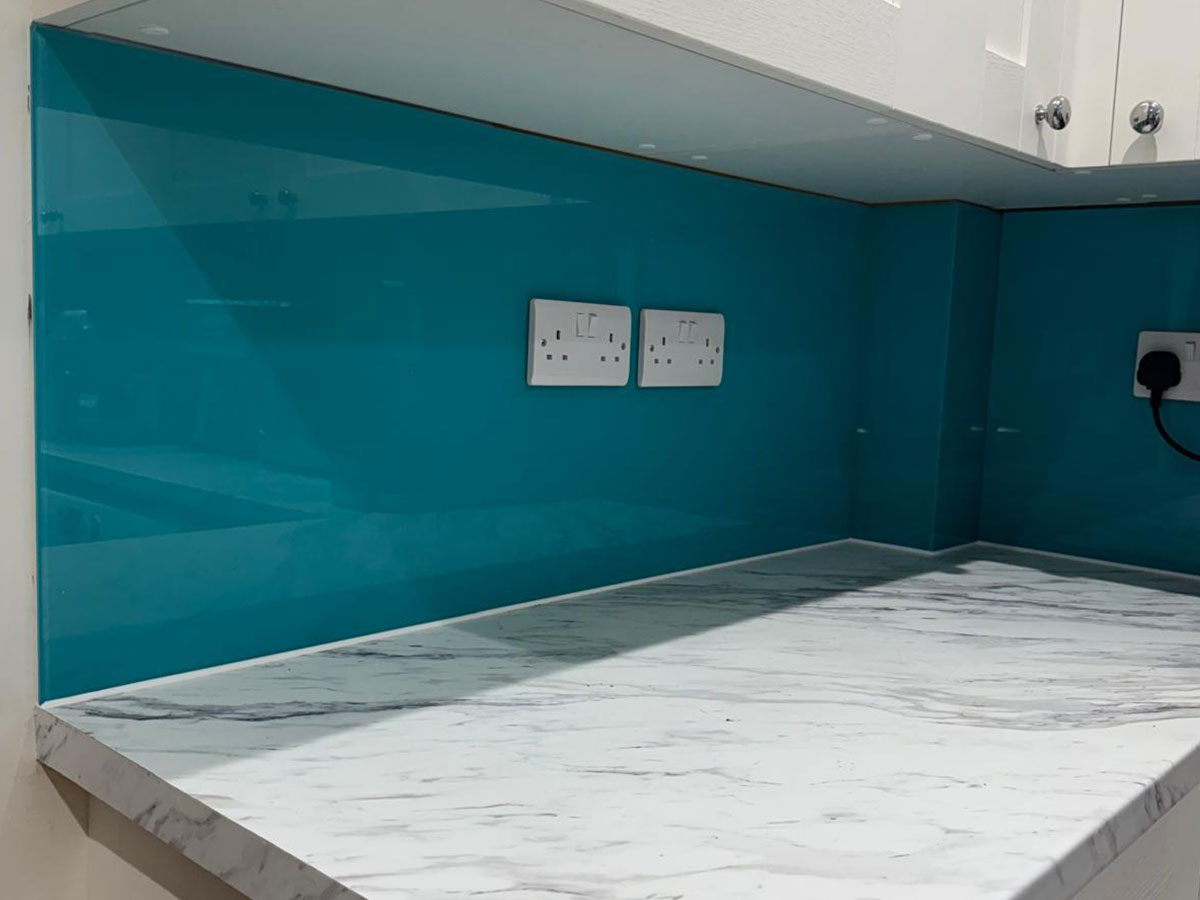
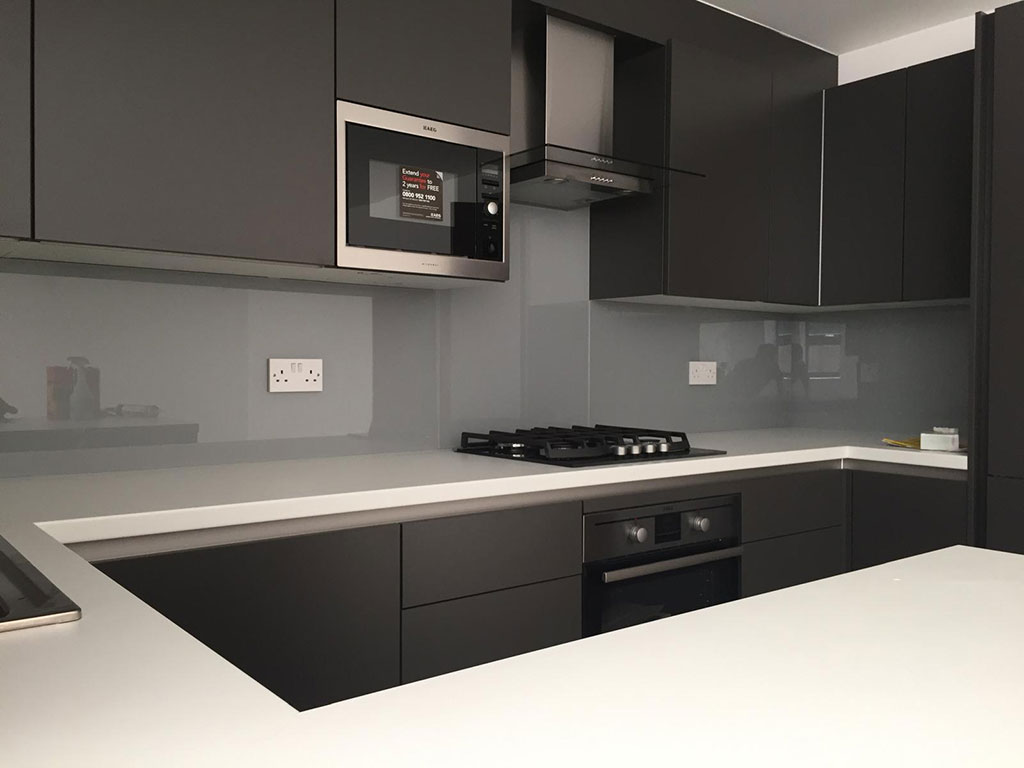
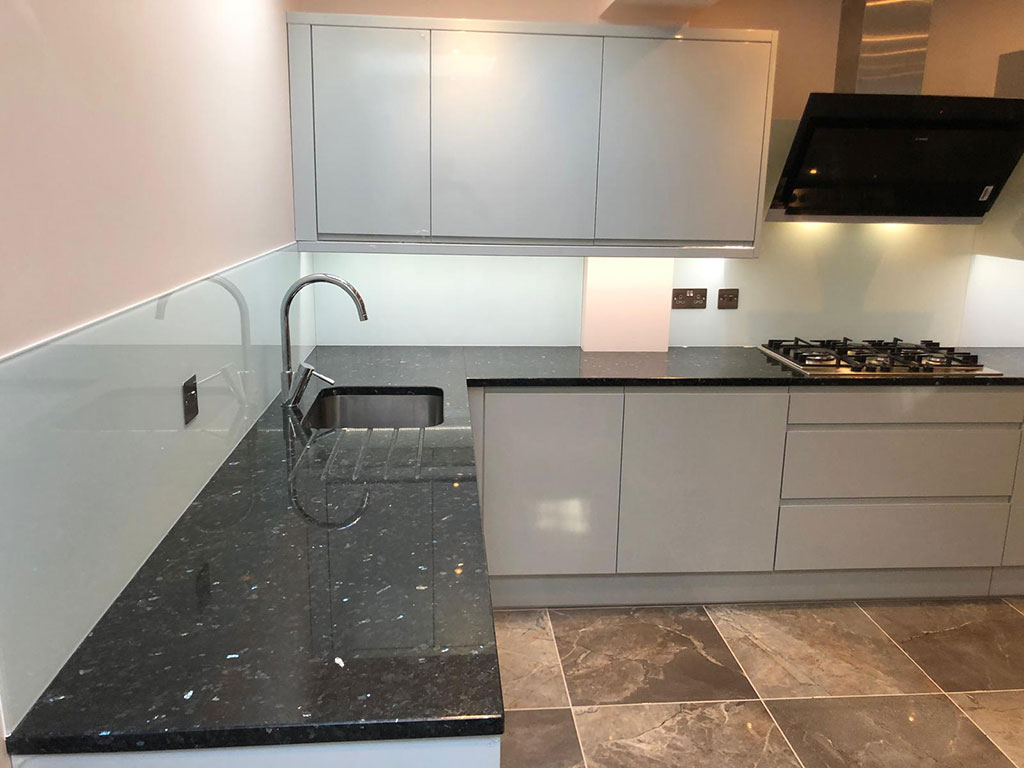
Here is the part nobody mentions until it is too late. Standard float glass is not colourless. It carries iron oxide, which gives it a green cast you can see on the edge of any pane. Back-paint standard float white and you do not get white, you get a faint mint. The same happens to greys, creams and pale blues. For those we use low-iron glass, sold as Optiwhite or Diamant, which is near enough clear and lets the colour read as the colour. For blacks, navies and strong reds the green never shows, so standard float is fine and cheaper.
Matching your colour
We match to a paint reference: RAL, BS 4800, Farrow & Ball, Little Greene, Dulux, whatever you have. Give us the code and the back-paint is mixed to it. No code is not a problem either: send a physical sample, an offcut of worktop or a spare cabinet door. Expect one thing though. A colour looks deeper behind glass than it does on a wall, because you are seeing it through 6mm of gloss, so a matt paint chip and the finished panel will never look identical side by side. If you are unsure, we can have a sample painted before the full run is made.
Cut-outs have to be right the first time
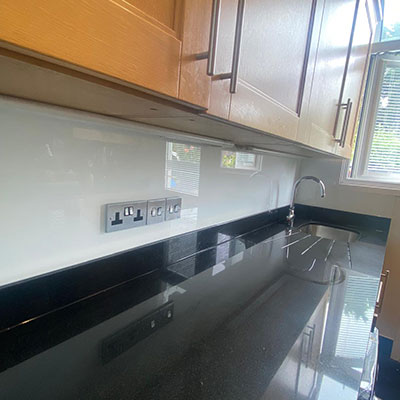
Every hole is machined before the glass is toughened. Sockets, switches, the extractor flue, a boiler pipe, a tap coming through the wall. Each one is cut, ground and polished while the pane is still annealed, and only then does it go in the furnace. Once toughened you cannot drill it, trim it or take a millimetre off an edge. The whole panel shatters if you try. That is why we template off the actual wall rather than off your kitchen plan, and why we come once the units, the worktop and the hob are in and the back boxes are fixed.
Splashbacks are priced by the square metre with a minimum charge, so a small panel behind a single hob works out dearer per square metre than a full kitchen run: the setup, the delivery and the fitting time barely change. We will not print a figure here, because two panels of identical size can be a long way apart on price. This is what moves it.
- Low-iron or standard float. Low-iron costs more per square metre. Whites, greys, creams and pastels need it. Blacks and strong colours do not.
- How many cut-outs. Every socket, switch, flue or pipe hole is a separate machining operation with its own edge to grind.
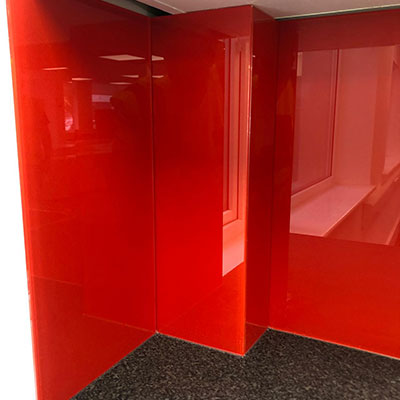
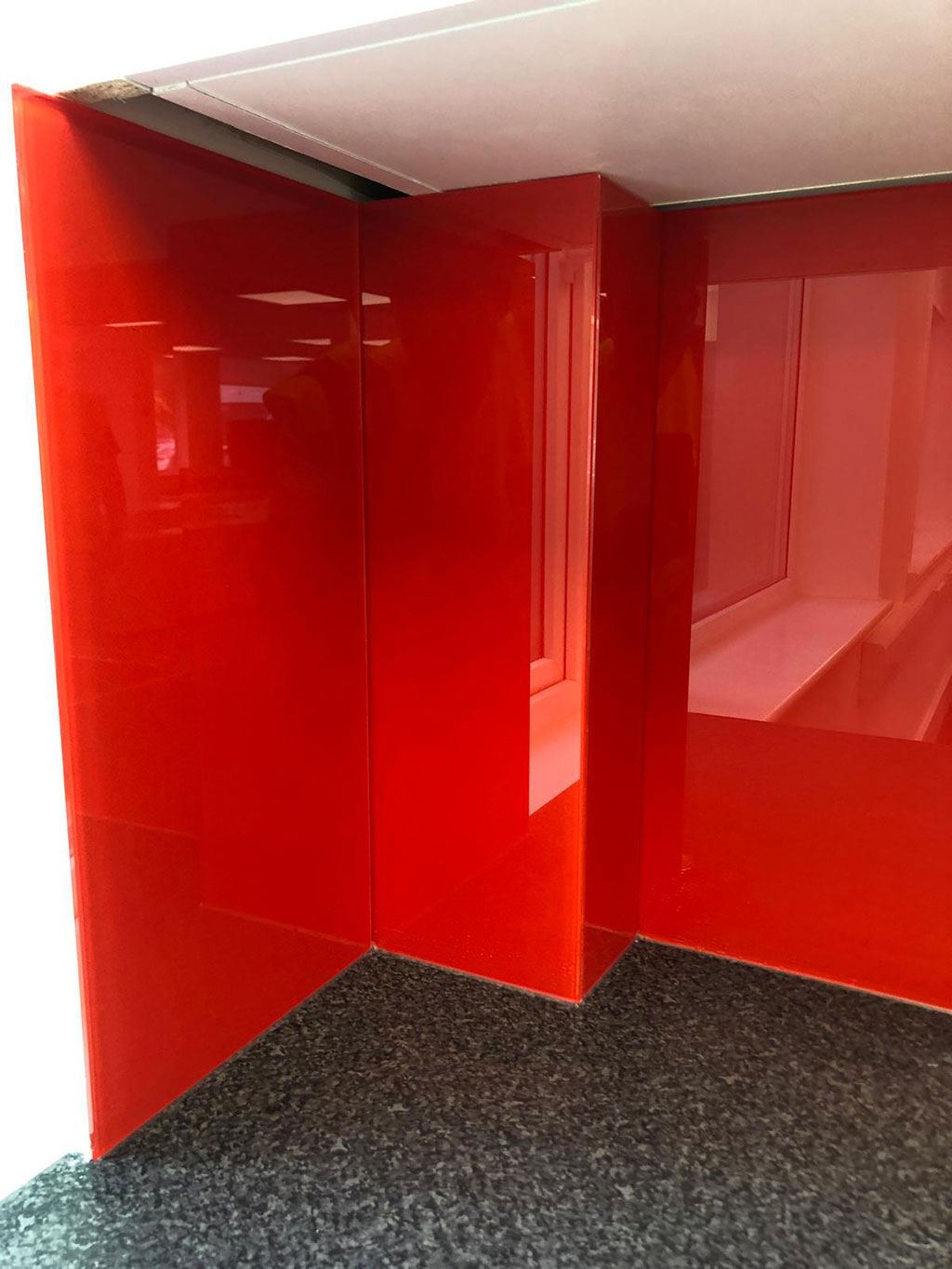
- Shape. A plain rectangle is the cheap version. Radius corners, angled returns and cuts around a window reveal or chimney breast all take template and machine time.
- Templating or measuring. Square walls and a straight run can be measured. A corner return, or a wonky 1930s wall, needs a physical template. That is a separate visit.
- Panel splits. Much over about 2.4 metres, or too big to get up a staircase, and it becomes two panels with a butt joint.
- Edges and finish. Visible edges are flat ground and polished; hidden ones only need arrissing. Mirrored, satin-etched and printed finishes all price differently to a back-painted colour.
- Making good. Old tiles off, adhesive hacked back and the wall reskimmed is time spent before any glass arrives.
How the job runs
Measuring or templating takes under an hour. The panel is then cut, machined, edge-worked, toughened, and only after that back-painted and cured. The paint goes on last because it would burn off in the furnace. That is normally a week to ten working days off site. Fitting is usually a morning. We bond the glass with a neutral-cure silicone, never an acetic one, because the acid in acetic silicone attacks back paint over time, then silicone the joint down to the worktop.
The three things that go wrong
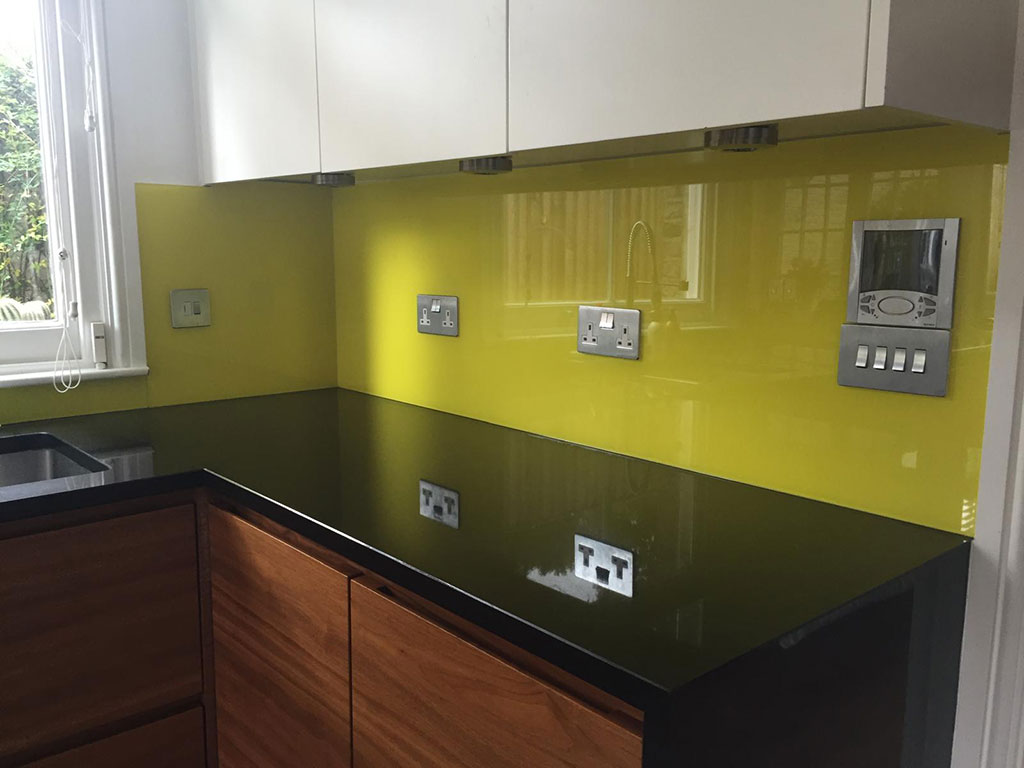
Ordering too early is the commonest. Worktops shift a few millimetres when they go in, hobs get moved, an extractor sits lower than the drawing said, and a toughened panel 5mm too tall is scrap. Walls are the second. Glass is dead flat and rigid, so it will not follow a bowed wall and a hump behind it shows up as a distortion in the reflection. The third is sockets: the faceplate has to sit back over 6mm of glass, so the standard screws no longer reach and your electrician needs longer ones or socket spacers.
Gas hobs, induction and where we fit them
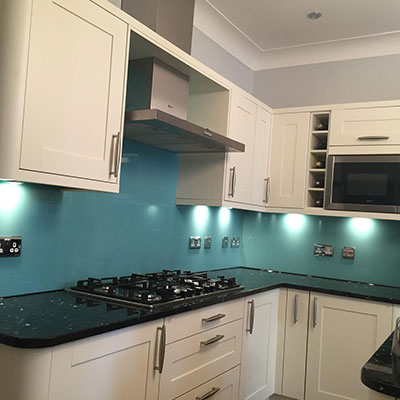
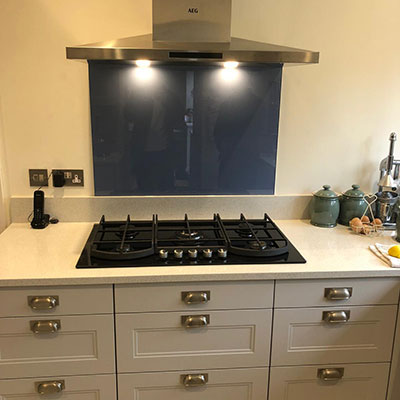
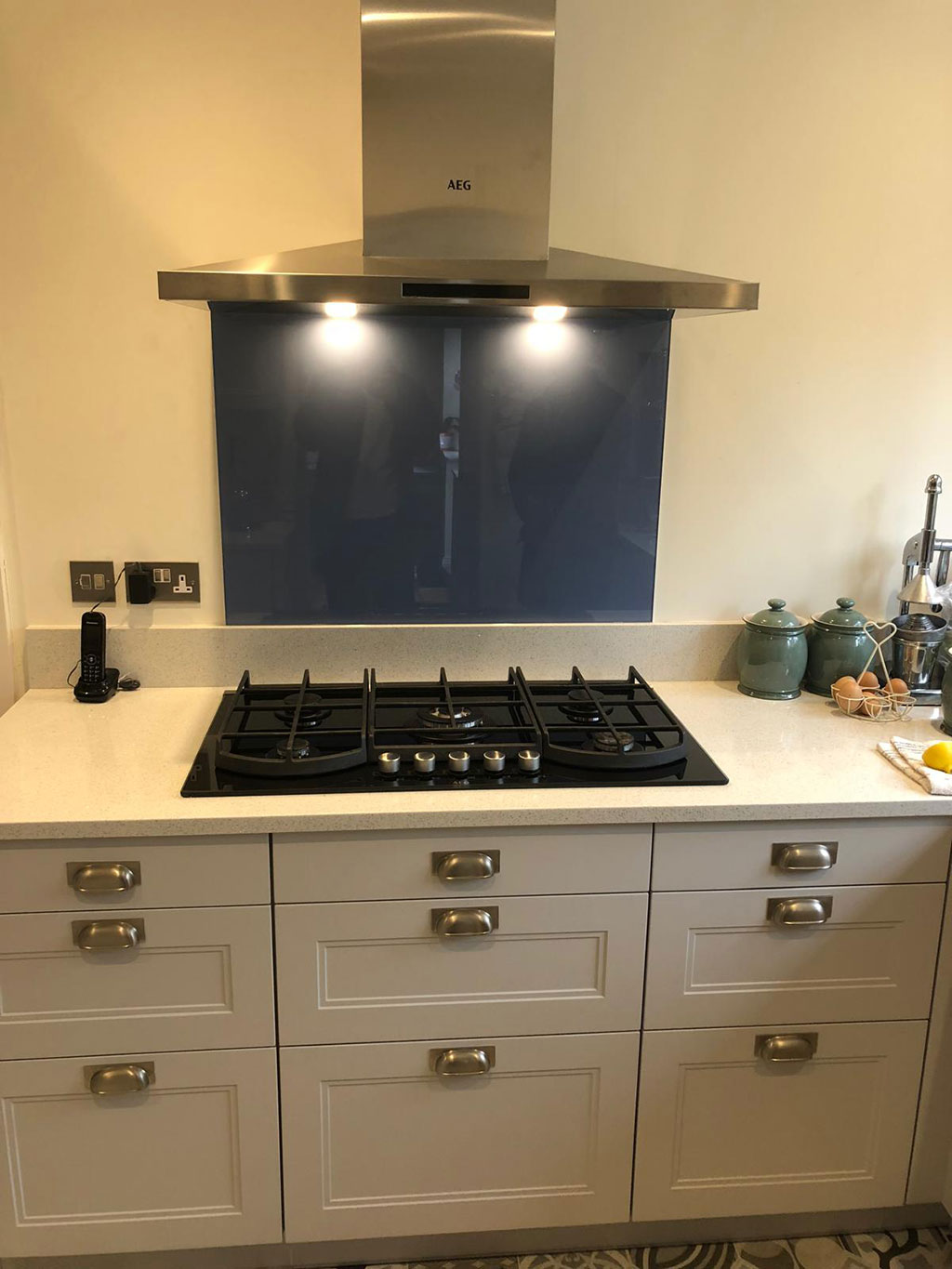
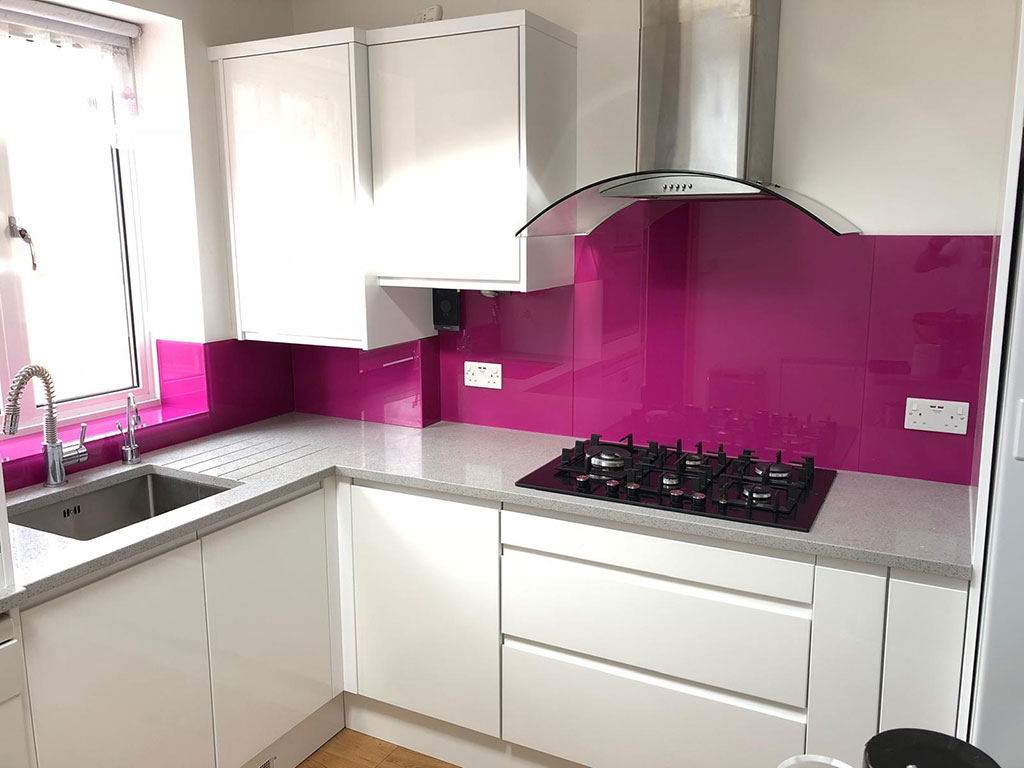
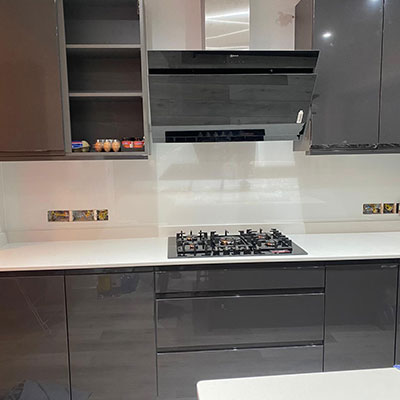
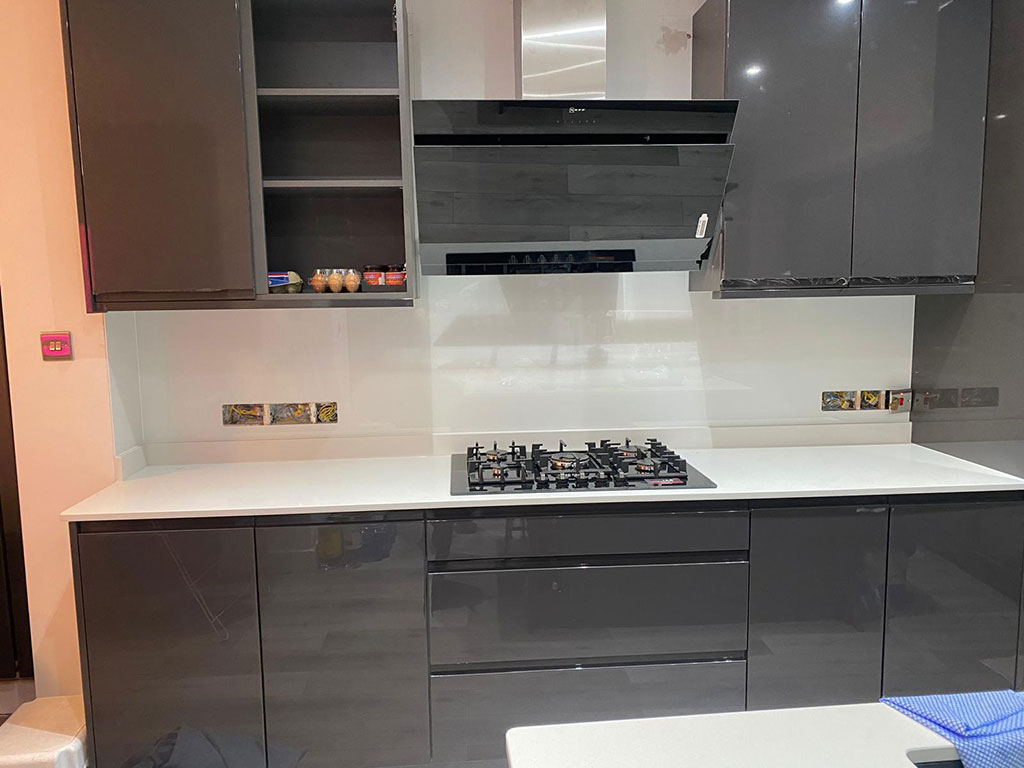
Toughened glass goes behind gas hobs regularly. There is a navy one further down this page sitting behind a five-burner gas hob under a chimney extractor. What matters is the clearance your hob manufacturer specifies between the burner and a vertical surface. Every hob manual states it and it varies, so tell us the model. Induction is easier, because the heat is in the pan rather than the surface. We fit splashbacks across Croydon, South London and Surrey: South Croydon, Purley, Sutton, Beckenham, and out to Epsom and the KT postcodes, which are a steady run for splashbacks and made to measure mirrors. It is the same trade as our shower enclosures: template, machine, toughen, fit.
Kitchen, Bathroom, Utility: We Do It All
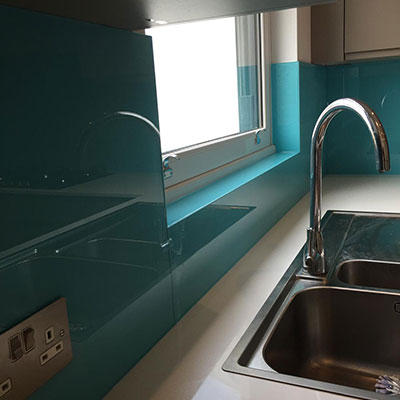
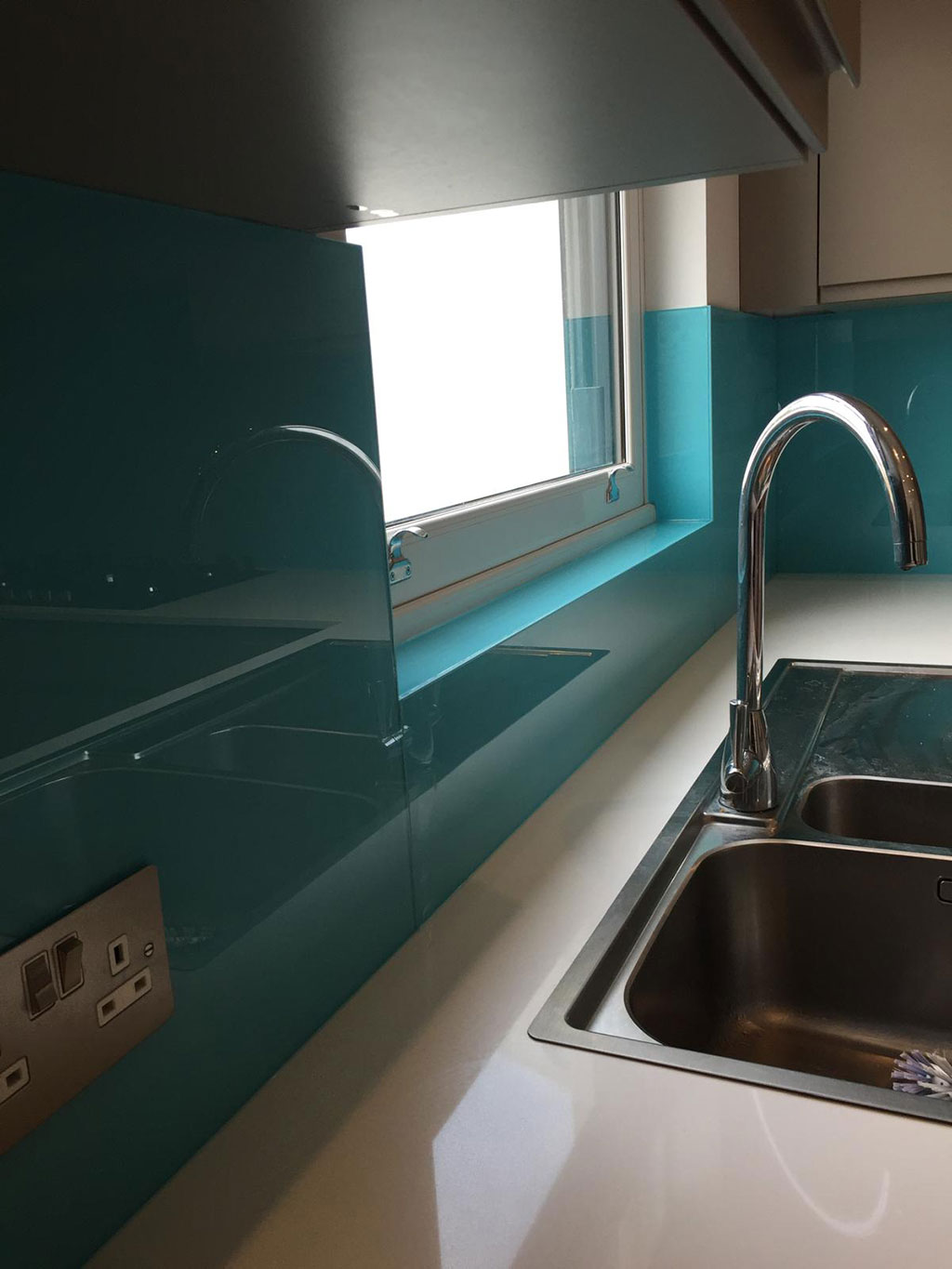
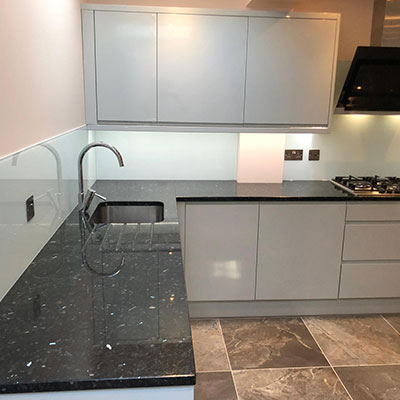
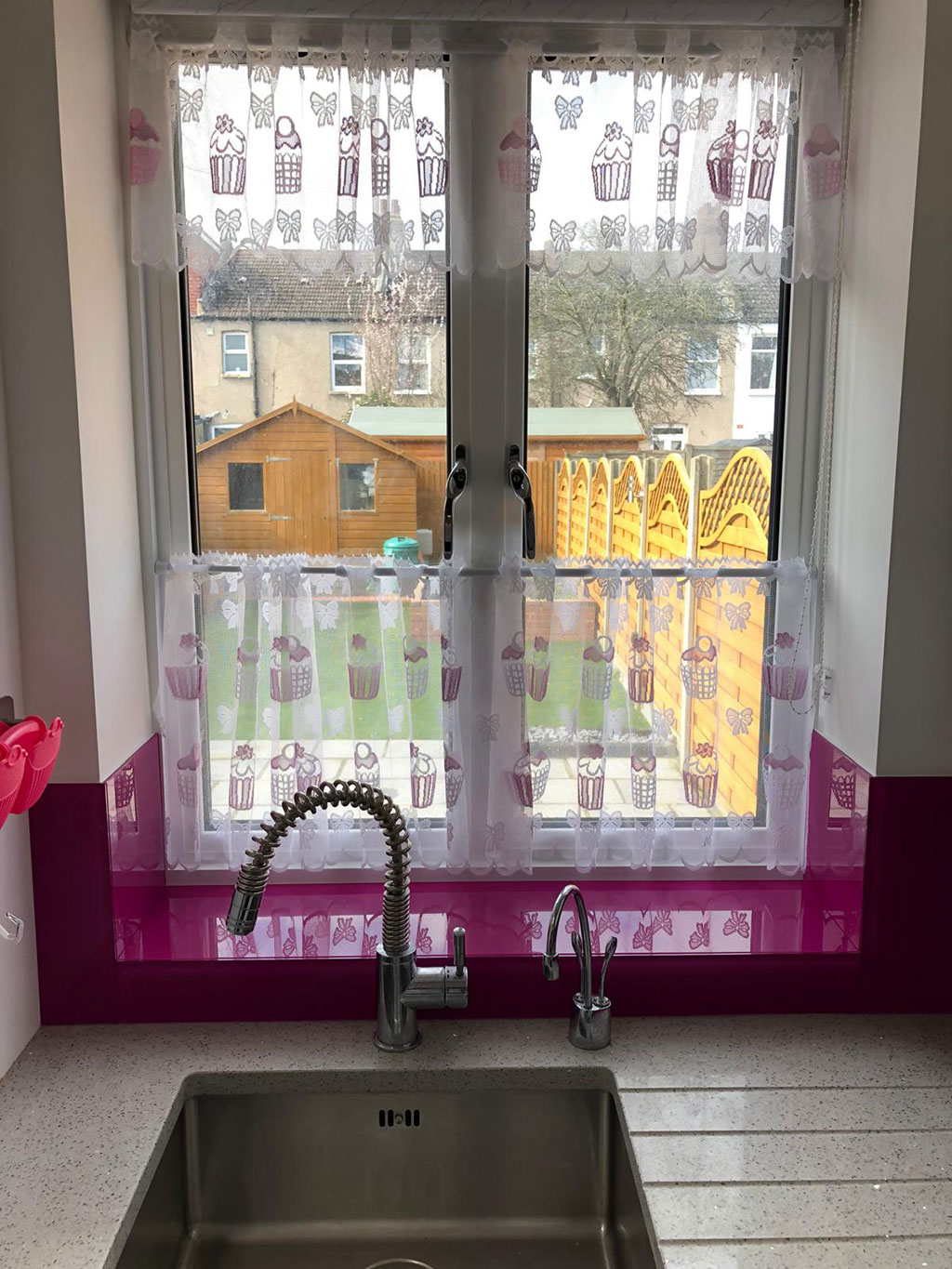
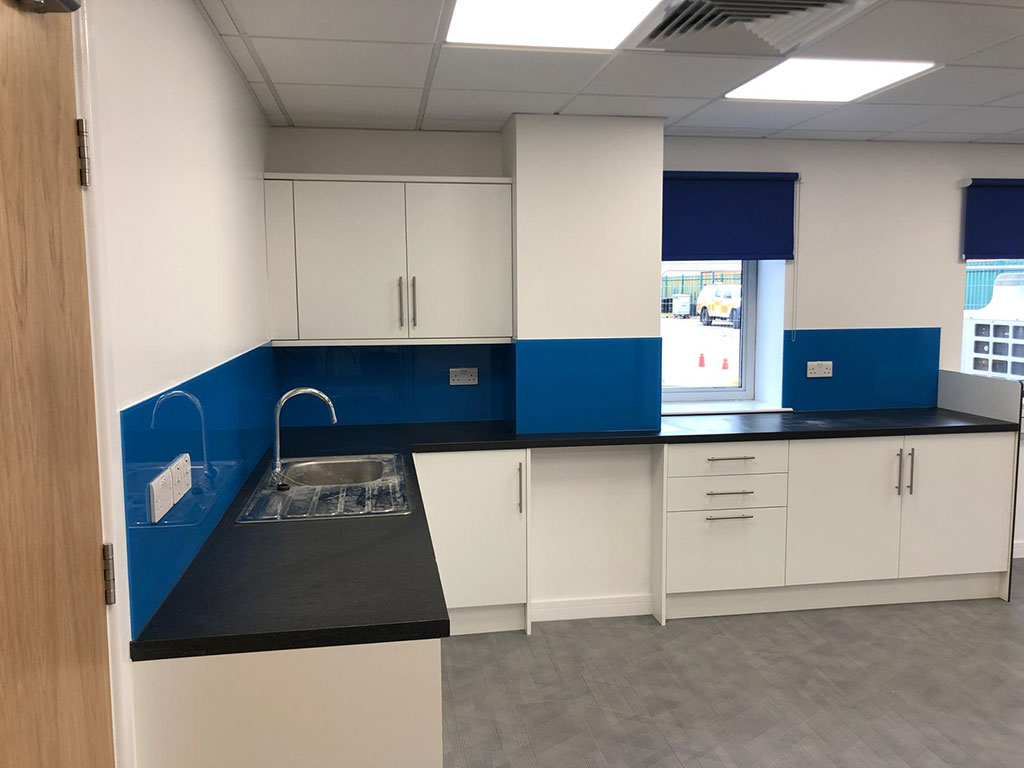
Glass splashbacks aren’t just for hobs. We install them behind sinks, along countertops, and in shower areas. All panels are templated for precision and installed with durable, high-strength adhesive.
Glass Splashbacks across South London and Surrey
We provide glass splashbacks throughout the areas below and everywhere in between. See our full areas covered page.




Frequently Asked Questions
There is no honest single figure. They are priced by the square metre with a minimum charge, and the size is only half of it: low-iron glass, the number of socket cut-outs, corner returns, polished edges and whether the run needs templating all move the price. A plain black panel behind a hob sits at the cheap end. Send measurements and a photo and we will price it properly.
Around a week to ten working days for most jobs. Measuring or templating takes under an hour. The glass is then cut, machined, edge-worked and toughened, then back-painted and cured off site, which is the part that sets the lead time. Fitting a normal kitchen run is a morning. We will give you a date at the point you order, not a guess.
Yes. Give us a RAL, BS 4800 or paint-brand reference and the back-paint is mixed to it. If you have no code, a physical sample works: a spare cabinet door, a worktop offcut, a tester pot. Bear in mind the colour reads deeper through 6mm of glass than it does on a wall, so it will not look identical to a matt paint chip held next to it.
If the colour is white, cream, grey or any pastel, yes. Ordinary float glass has a green cast from its iron content, so a white back-paint comes out looking faintly minty. Low-iron glass is close to genuinely clear and lets a pale colour stay pale. For black, navy, dark grey or a strong red there is nothing to correct, so standard float is fine and costs less.
Yes, and we do it often. The one rule is the clearance your hob manufacturer specifies between the burner and a vertical surface. It is in the hob manual and it differs between models, so tell us the make and model and we will set the panel height to suit. Behind a range cooker with a high-output wok burner, ask us before you order anything.
No, and this is the one thing worth remembering. Toughened glass cannot be cut, drilled or trimmed after it comes out of the furnace: any attempt shatters the whole panel. Every socket, switch and flue cut-out is machined beforehand. That is why we template late, after the units, worktop, hob and electrical back boxes are all in position.
Sometimes. If the tiles are flat, firmly stuck and the extra build-up will not foul the sockets or the worktop upstand, glass can be bonded straight over them. Tiles with a raised relief, chipped edges or a bowed section will telegraph through the panel and show in the reflection. In most kitchens it is cleaner to strip them and make the wall good first.
We are based in Waddon, CR0, so Croydon and the towns around it are our home patch: South Croydon, Purley, Coulsdon, Sanderstead, Selsdon, Shirley and Sutton. We go out across South London to Streatham, Beckenham and Bromley, and into Surrey for Epsom, Banstead, Caterham, Reigate and Oxted. See every area we cover if yours is not listed.