
Sanderstead is an interwar suburb, and the glazing follows the build
Most Sanderstead calls come down to two things: the 1930s bay under its gable, and the uPVC fitted over the original timber in the 1990s, now misting and seizing at the hinge. Both are jobs for a glazier in Sanderstead rather than a window company: JM Glass & Glazing swap the unit, re-lead the stained top lights and leave your frames alone, working from Waddon Close in Croydon, CR0 4JT.
Sanderstead station opened in 1884 and then almost nothing happened for forty years. What actually built the place was Southern Railway electrification, and the suburb went up in one short burst between the wars: wide tree-lined avenues of substantial detached and semi-detached houses, generous plots, deep front setbacks. Walk Mitchley Avenue or Norfolk Avenue and you are looking at a very narrow band of building years. That matters to a glazier, because whole roads reach the same faults at the same time.
Richard Costain and Sons built here: the same firm behind Selsdon Garden Village. Estate agents still describe the 1930s semis on Norfolk Avenue and Elmfield Way, just off Church Way, as Costain built, and they are right to: big rooms, long back gardens, and on the untouched ones, original timber casement bays with leaded or stained top lights sitting above the opening lights. Round Sanderstead Pond there is older stock again, including All Saints' Church on Church Way, Grade I listed with a late 13th-century nave.
The bay is the job, not just the window
Most of our glass replacement work in Sanderstead ends up being bay work. Canted bays, square bays, tiled and leaded bay roofs, and on a good deal of the detached stock the bay sits under a gable and carries load. That is not a frame swap. It wants proper bay posts, a lintel and often temporary support before anything comes out. Do it badly and the brickwork above will tell on you inside a year. Get the proportions wrong (a fatter frame, a lower transom), and the house reads wrong beside the four identical ones either side.
The leaded and stained top lights are usually worth keeping. We can lift a damaged panel, repair or re-lead it and set it into a modern sealed unit, so you keep the pattern and lose the draught. Where a panel has gone completely, we can copy the lead pattern off the next window along. It costs a bit more than plain float glass, and it is the difference between a 1930s house and a 1930s house with new windows in it.
The other thing happening across CR2 right now is that the first generation of uPVC (fitted through the late 1980s and 1990s, mostly over the top of the original timber), is failing all at once. Misted units, seized friction hinges, subframes that were never right. Here is what we are actually called out for in Sanderstead.
- Misted and blown double glazing. The seal has gone and moisture is sitting between the panes. We measure, make the unit and swap the glass. The frame stays. See misted unit replacement.
- Window repairs. Failed friction hinges, dropped sashes, handles and locks, and the rotted timber subframes you find under a cheap 1990s replacement. Window repairs are often a lot cheaper than people expect.
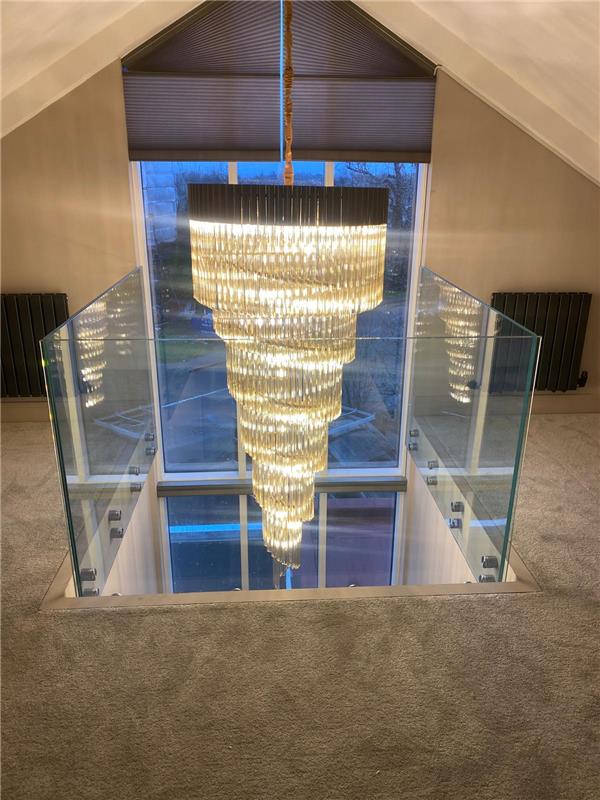
- Gable-end and half-landing stairwell windows. The tall ones on the 1930s detached stock. Awkward height, heavy glass, and honestly a scaffold job rather than a ladder job.
- Glass cut to size. Shelves, cabinet glass, table tops, greenhouse and cold-frame panes, toughened or laminated to order, bring the broken piece in or we come and template it.
- Broken glass, made safe the same day where we can. A smashed pane, a failed door light, a cricket ball off the rec. We board up first, then come back and glaze once the unit is made. Emergency glazier.
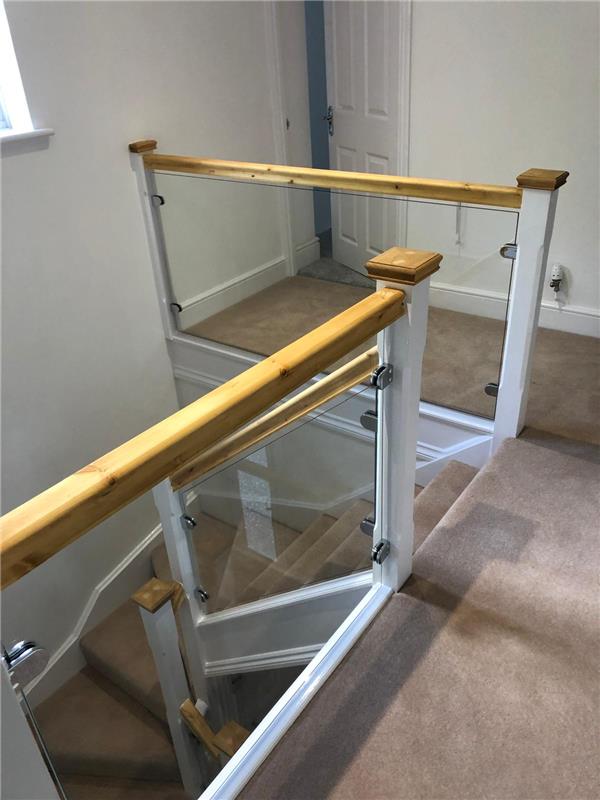
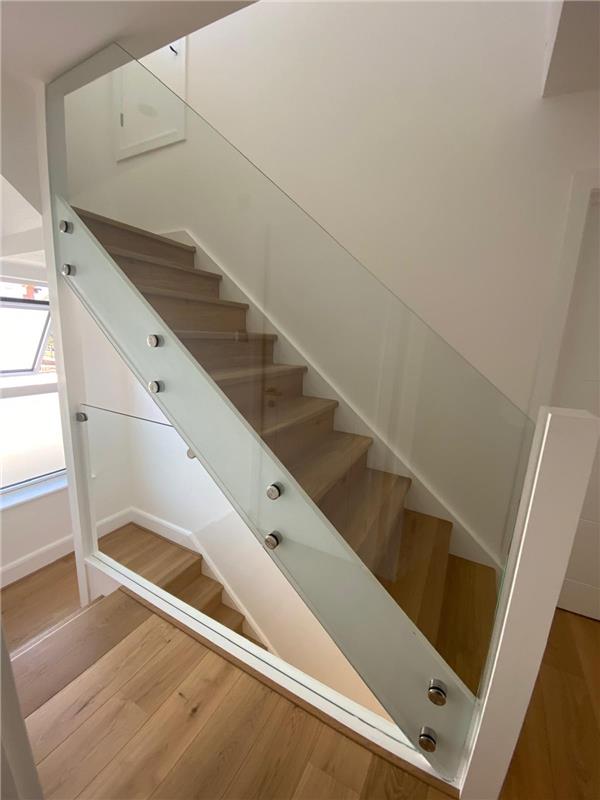
- Roof lanterns, bi-folds and rear-extension glazing. The deep Costain back gardens mean people here extend rather than move, and that usually brings splashbacks and internal balustrades with it.
Commercial work here comes off three small parades and nothing bigger. The village shops along Limpsfield Road and Cranleigh Parade opposite the pond; Station Parade and Station Approach by the station, where shop building started as far back as 1901; and the little parade at Elmfield Way. St Mary's Road went up around 1930. The trade is independent (estate agents, dentists and opticians, pharmacies, cafés, hairdressers, a funeral director), so the work is toughened and laminated shop front glass, door glass and closers, manifestation on new glazing, and reglazing after a break-in. No curtain walling. And no pub trade at all, because the Atwood family and the rector wrote a covenant against it and it has held.
No conservation area, which makes replacement simpler here
Worth knowing before you ring the council: Croydon has twenty designated conservation areas and Sanderstead is not one of them. There is no Article 4 direction over the village either. For most houses in CR2 that means full-frame replacement is planning-simple in a way it is not in parts of central Croydon. The real constraint is your neighbours, not the planners, because the roads went up together, a bay that does not match the run either side of it is very visible. All Saints' on Church Way is the exception: Grade I listed, and a different conversation entirely.
About four miles from the yard in Waddon
We are at Waddon Close, CR0 4JT. The run out is Duppas Hill Road, then the A235 Brighton Road through South Croydon, then Sanderstead Road and up Sanderstead Hill onto Limpsfield Road. It is about 2.8 miles as the crow flies and roughly four by road: fifteen to twenty minutes when it is clear, and add ten at the Atwood, Gresham and Ridgeway school run or on Brighton Road at going-home time. We cover CR2 9 round the village and Mitchley Hill, CR2 0 on the Purley Oaks side, and CR2 8 towards Selsdon.
One honest word about quoting. On the plots that fall away off Sanderstead Hill, Mitchley Hill and the top end of Limpsfield Road, access is what drives the price, not the glass. A large sealed unit carried down a steep side return, or a stairwell window that needs a scaffold rather than a ladder, is a different job to the same glass on the flat. We would rather come and look than guess down the phone.
We are rated 5.0 on Google. Edge Building Products picked a job of ours as their Installation of the Month for July 2025: 44 shaped double-glazed units set into Edge 50mm capped aluminium glazing bars on a roof light refurbishment. That is a supplier featuring the work, not an accreditation, and we would rather be straight about the difference. Jason, Ray or Craig will be the one who turns up. There are more finished jobs in the gallery.
Glazing services we provide in Sanderstead
What people in Sanderstead ring us about, in roughly the order it comes in.
Areas near Sanderstead
We also cover Croydon, South Croydon, Purley, Coulsdon, Selsdon, Kenley. See every area on our areas covered page.
Frequently Asked Questions
We are in Waddon, CR0 4JT: about four miles by road. Down Duppas Hill Road, along Brighton Road through South Croydon, then up Sanderstead Hill. Fifteen to twenty minutes when it is quiet, longer at the school run or evening peak. For a smashed pane we aim to make the property safe the same day where we can.
No. Croydon has twenty designated conservation areas and Sanderstead is not among them, and there is no Article 4 direction over the village. That makes full-frame window replacement straightforward on planning grounds for almost every house here. The exception is All Saints' Church on Church Way, which is Grade I listed and needs listed building consent for any glazing work.
Usually, yes. The 1930s semis on Norfolk Avenue and Elmfield Way tend to carry a repeating lead pattern right across the bay, so if one panel is broken we can copy the pattern off the window next to it. We can also re-lead an original panel and set it inside a modern sealed unit, so the look stays and the draught goes.
Almost never. Misting means the seal on the sealed unit has failed and moisture is sitting between the panes. If the frame and the hinges are sound we measure the unit, make it and swap the glass, and the frame stays put. On the 1980s and 90s uPVC across Sanderstead that is nearly always the answer, and it costs a fraction of a new window.
Yes. CR2 9 covers the village core, Limpsfield Road and Mitchley Hill. CR2 0 runs down Sanderstead Road towards Purley Oaks. CR2 8 takes in Norfolk Avenue and the Selsdon-facing edge. We also work either side of the boundary at Hamsey Green, Purley Downs and Croham Hurst. Your post town reads South Croydon. That is normal for Sanderstead.
Yes. The village parades and Station Approach are almost all independents, so it is toughened or laminated shop front panes, door glass and closers, manifestation to make new glazing visible, and boarding up and reglazing after a break-in. We can board a shop the same evening where we can, then glaze it properly once the unit is made.
Yes. Shelves, cabinet glass, table tops, and the greenhouse and cold-frame panes that come with the long back gardens on the Costain roads off Church Way. Give us the sizes and say what it is for, or bring the broken piece in and we will work off that. Table tops and anything low down want toughened, which has to be made to size rather than cut afterwards, so that is ordered in rather than cut off the rack.
In most cases the frame does not need to come out. The 1980s and 90s uPVC across CR2 fails at the sealed unit and the friction hinges long before the frame does, so we replace the glass and the hardware and leave the frame alone. That is faster, and far cheaper. Where a bay under a gable is genuinely rotten it needs a firm that fits whole windows. We are glaziers, not a replacement-window company, and we will tell you which of the two you need.