
A made-to-measure shower enclosure, in plain terms
JM Glass & Glazing are glaziers based at 24 Waddon Close in Croydon CR0 4JT. We measure, make and fit frameless and semi-frameless shower enclosures across South London and Surrey.
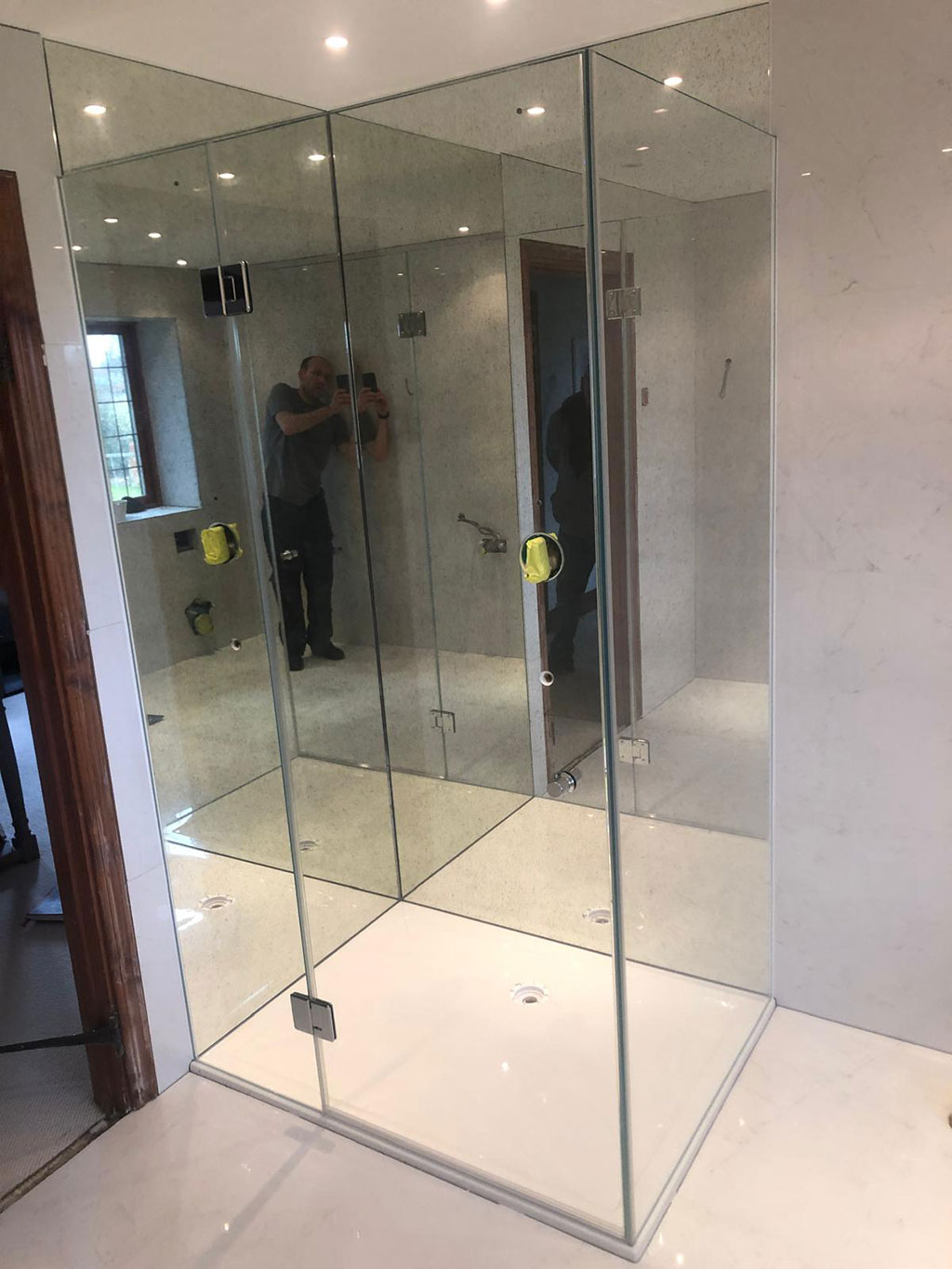
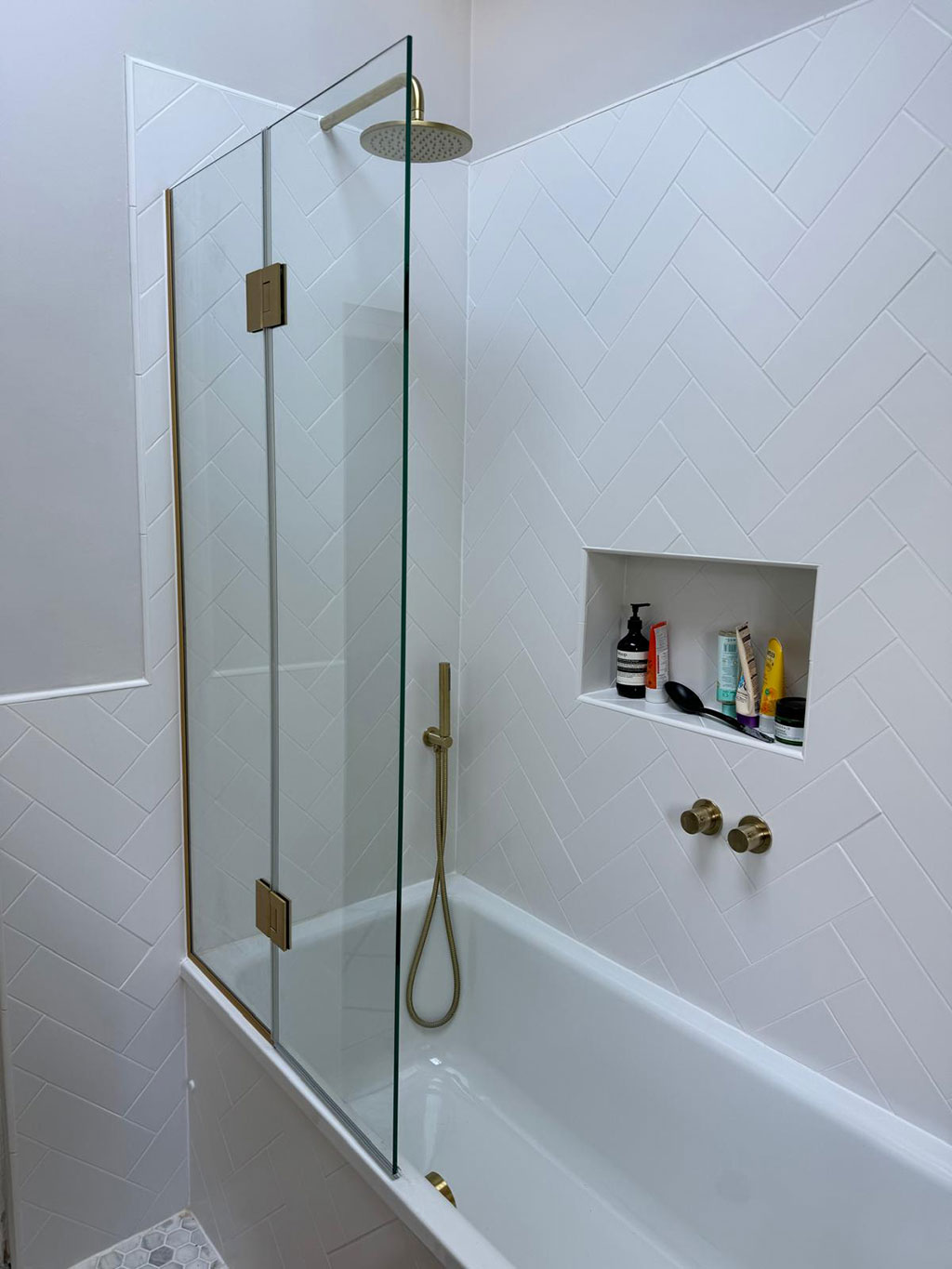
A made-to-measure shower enclosure is toughened glass cut to the exact shape of your bathroom, instead of a boxed kit built to the nearest 100mm. Frameless means the glass is carried by hinges, clamps and brackets fixed into the wall or floor, with no aluminium frame round the edges. Semi-frameless keeps a slim channel on the fixed side and leaves the door running free, which costs less and is far more forgiving on a bad wall. We measure it, have the glass cut to size and fit it ourselves, across Croydon, South London and Surrey.
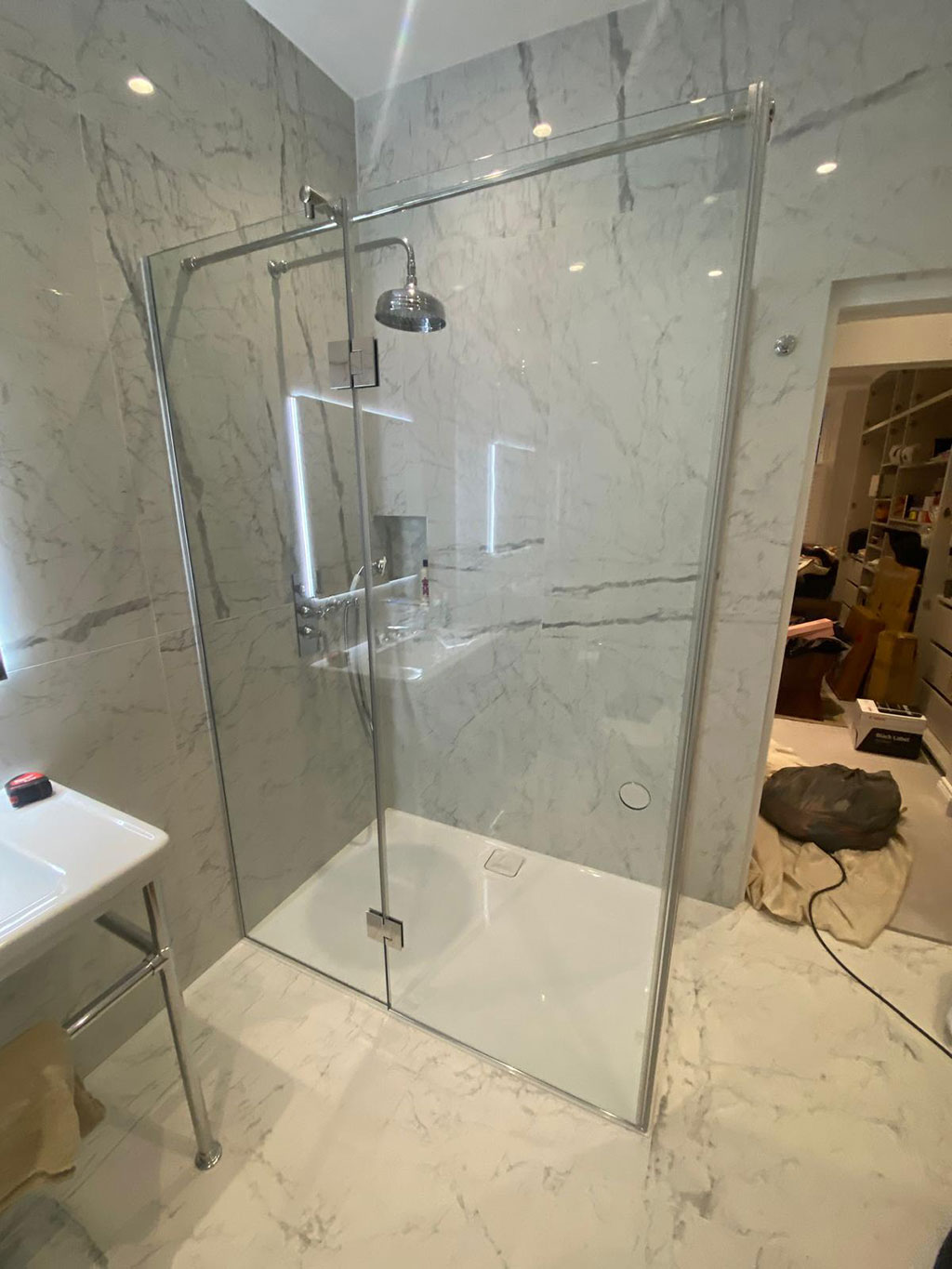
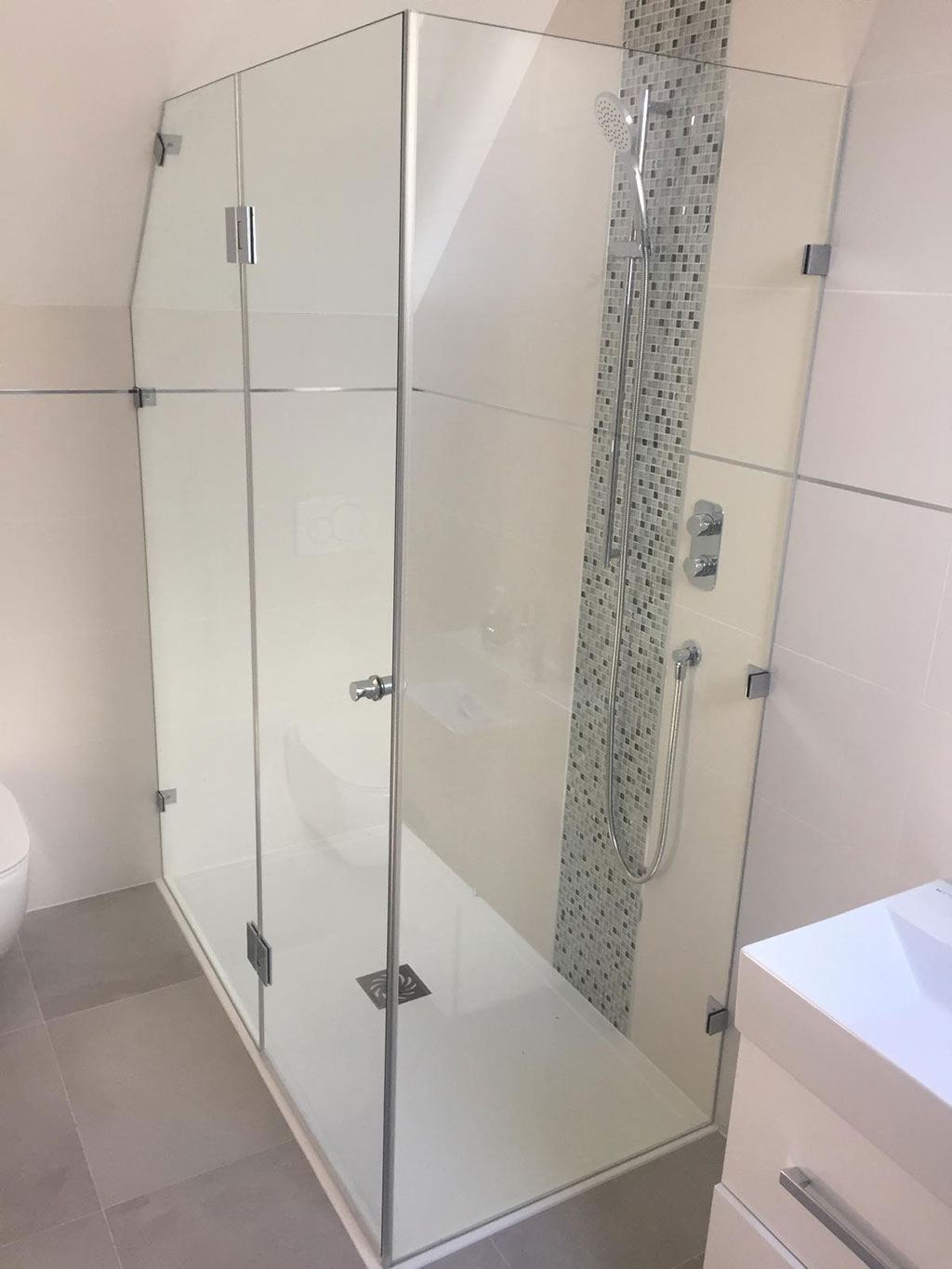
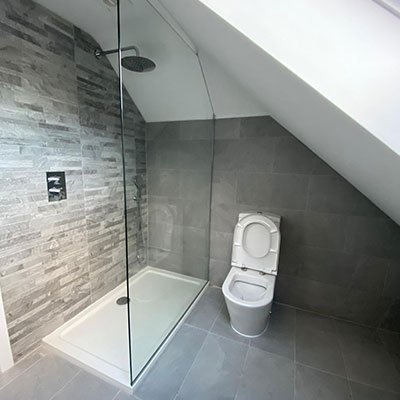
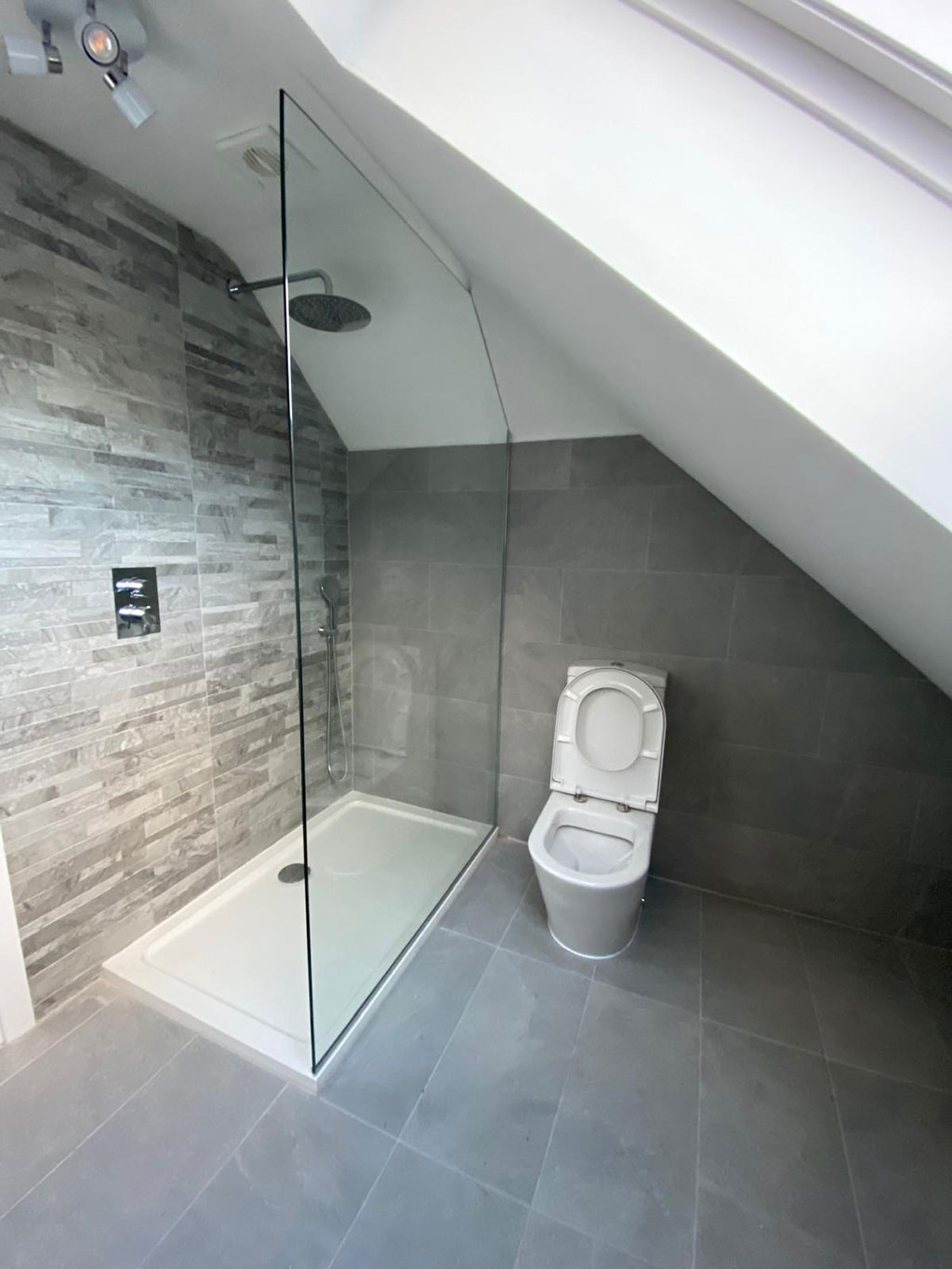
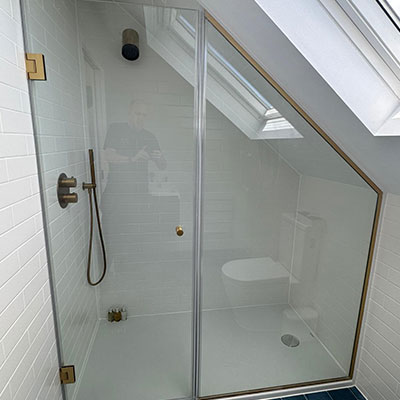
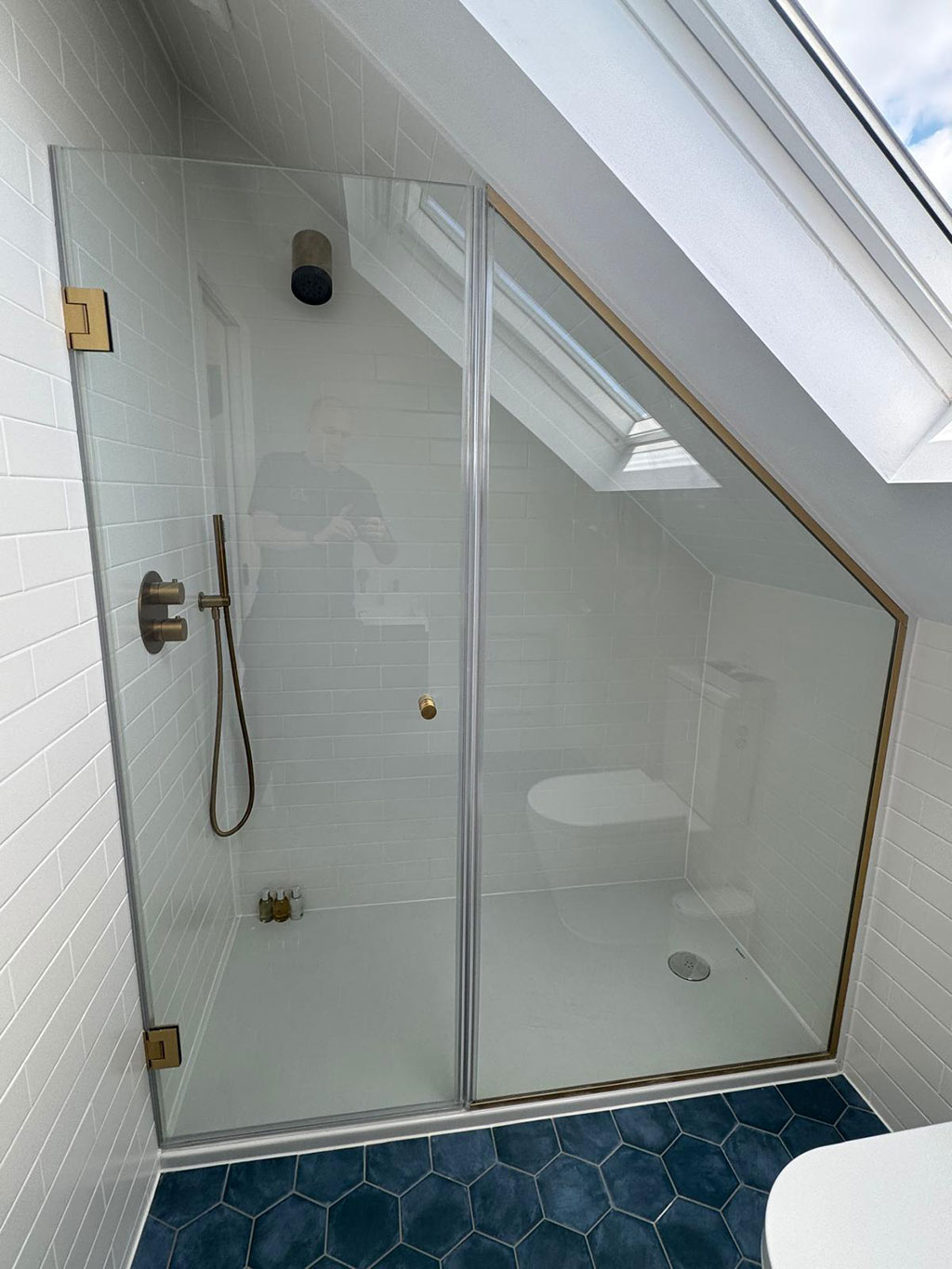
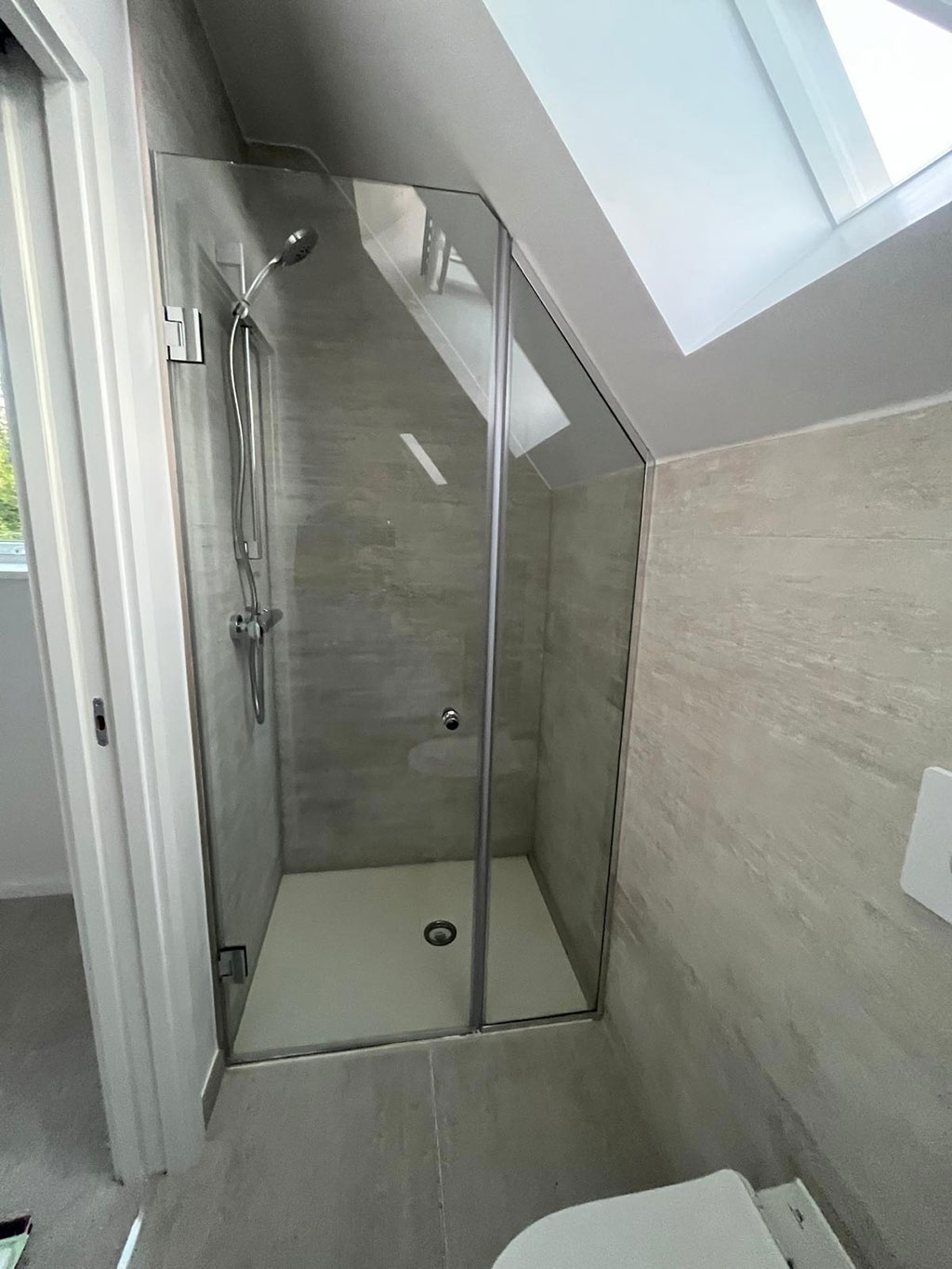
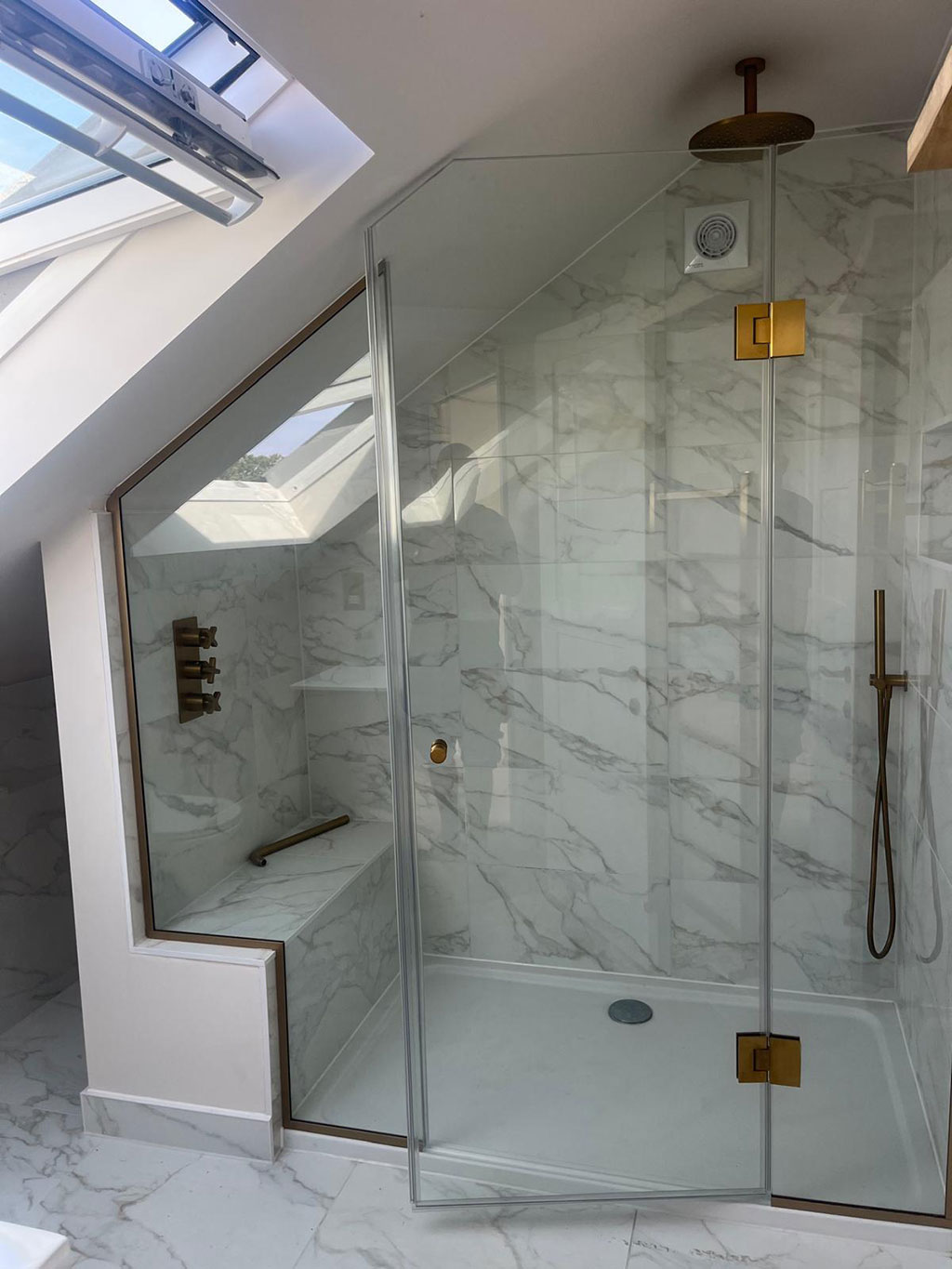
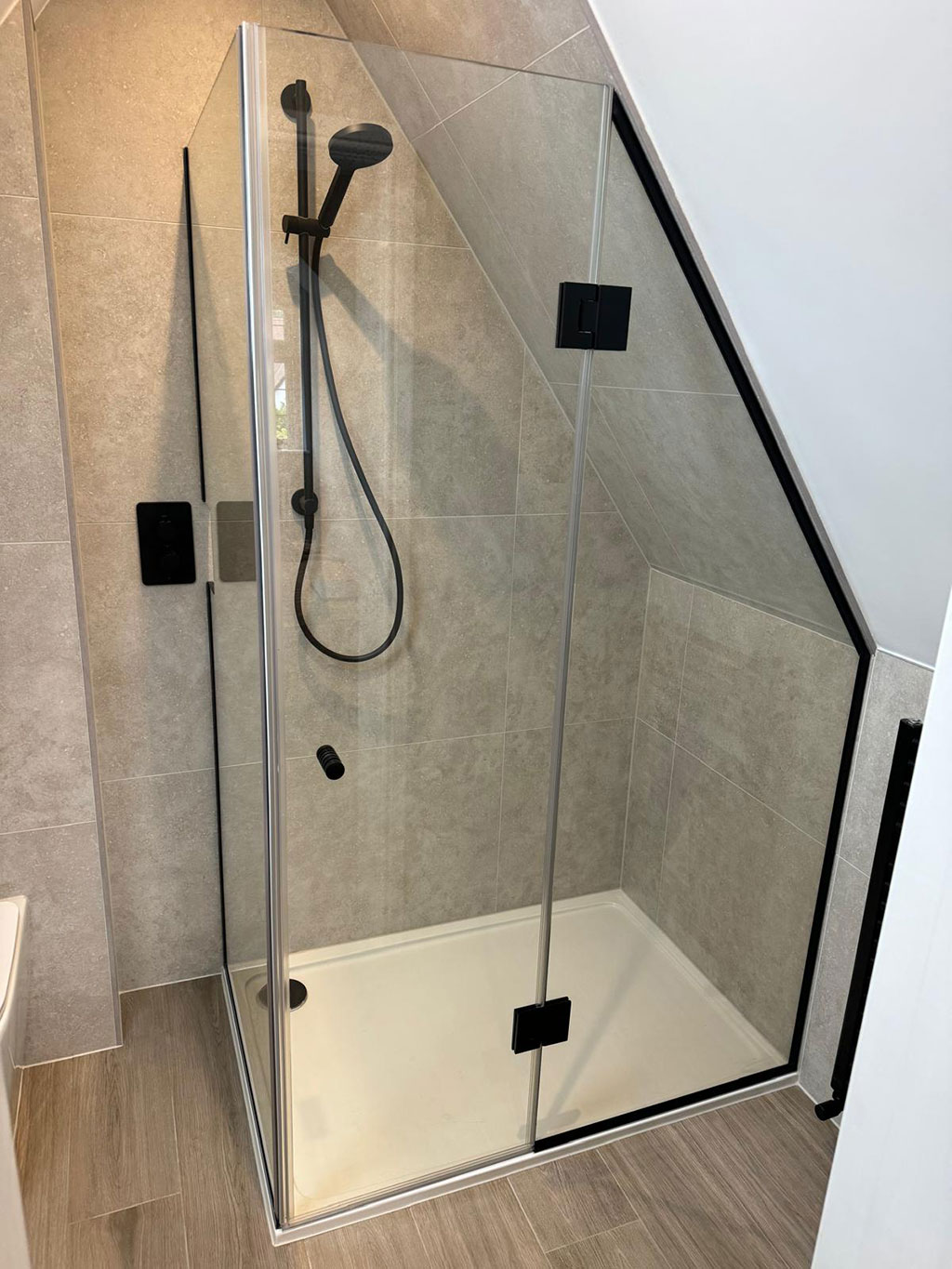
Most of what we fit is one of four things. A walk-in: one fixed panel, usually 1000mm to 1400mm wide, braced back with a slim bar. A door and return panel in an alcove. A screen cut to the slope of a loft ceiling, which is a big share of our work in the converted roofs around South Croydon, Sanderstead and Purley. Or a wetroom screen standing on a tanked, tiled floor with no tray at all. If your alcove is genuinely square and a standard 900 enclosure will drop straight in, we will say so. There is no sense paying for shaped glass you don't need.
Out-of-square walls are the normal case, not the exception
Almost no bathroom wall is plumb, and tiling makes the error worse. Over a two-metre height, 10mm to 20mm of lean is ordinary in a Victorian terrace, and boxed-in soil pipes and old chimney breasts add to it. Off-the-shelf enclosures hide that in a wall profile, and most profiles carry only around 20mm of adjustment. Past that the door binds at the top, or you get a gap at the bottom you can never seal. We measure the opening at three heights, check the diagonals and the floor level, and for anything shaped or raked we make a template on site. The part people don't expect: toughened glass is cut, drilled and notched before it goes into the furnace. It cannot be trimmed afterwards. Get the survey wrong and the panel is scrap, which is why we measure the tiled wall, never the bare one.
8mm or 10mm toughened, and how we choose
Both are toughened safety glass, made to BS EN 12150 and stamped at the corner. Toughened glass is four to five times stronger than ordinary glass of the same thickness, and if it does break it goes to blunt granules rather than shards. In a shower that is a legal requirement, not an upgrade. What separates 8mm from 10mm is stiffness and weight. 8mm runs about 20kg per square metre, 10mm about 25kg, so a 2000 x 900 fixed panel in 10mm is roughly 45kg of glass. That is a two-man lift and a fixing that can genuinely take it.
- 8mm: doors and returns up to about 900mm wide, bath screens, anything held on two edges. Lighter, cheaper, kinder to a plasterboard wall.
- 10mm: walk-in panels over about 1000mm, anything over 2m tall, long unsupported returns and glass-to-glass hinged doors. It flexes less, so the door stays where you leave it.
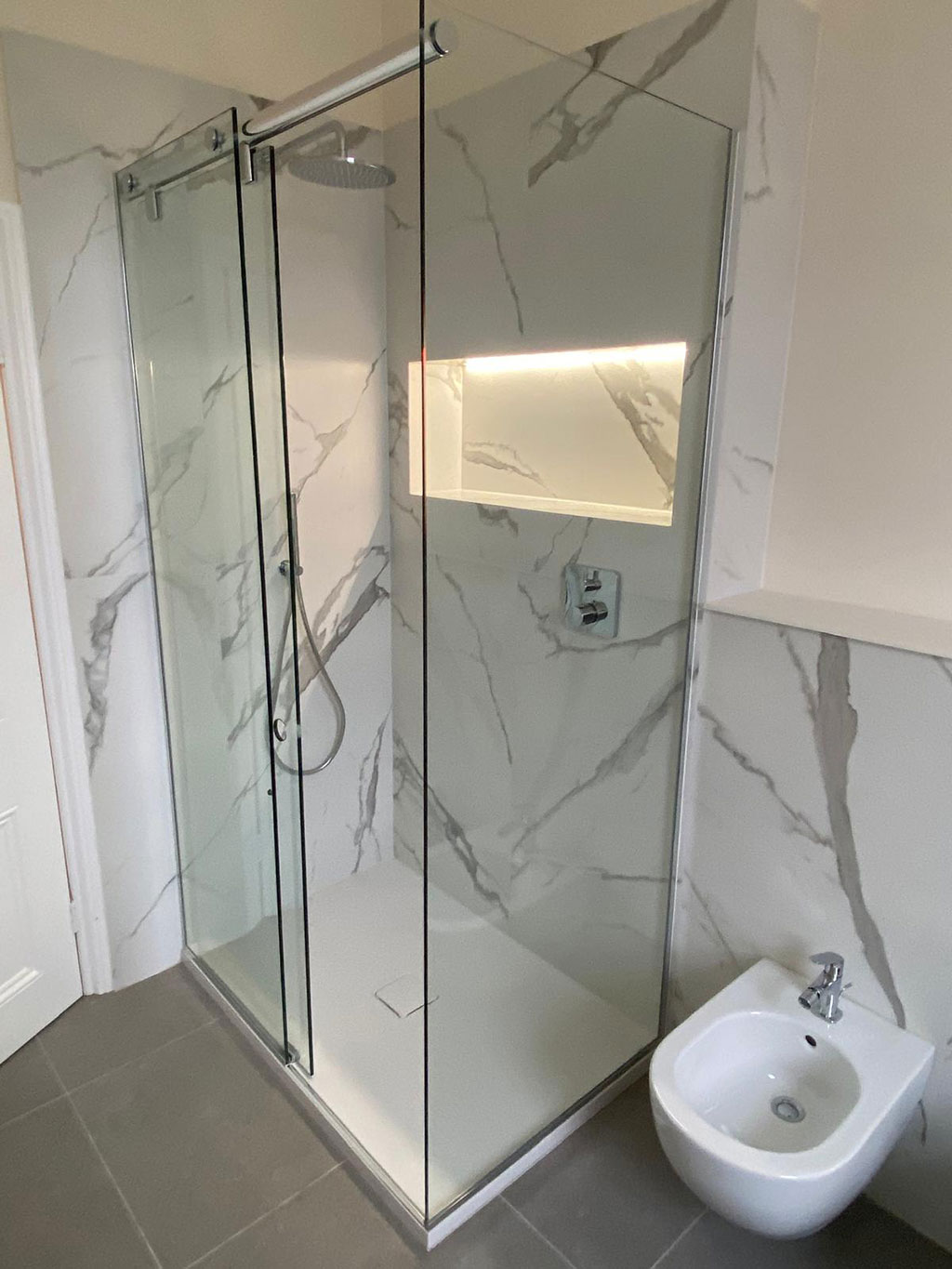
- Low-iron glass, takes the green cast out of the exposed edge. Worth it against white marble or pale tiles, where standard float glass reads as a green line.
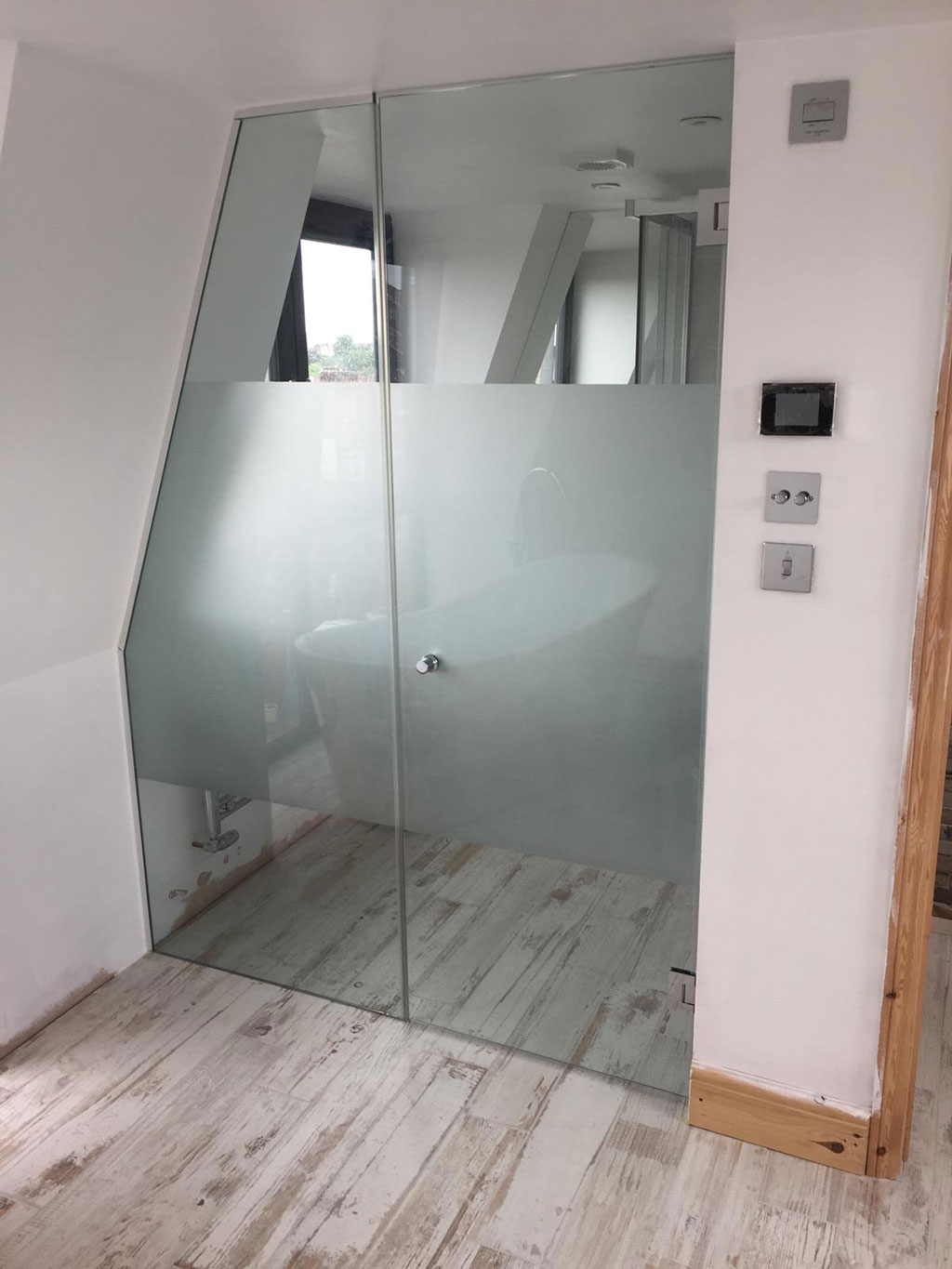
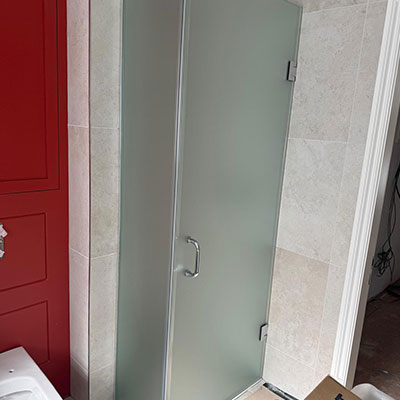
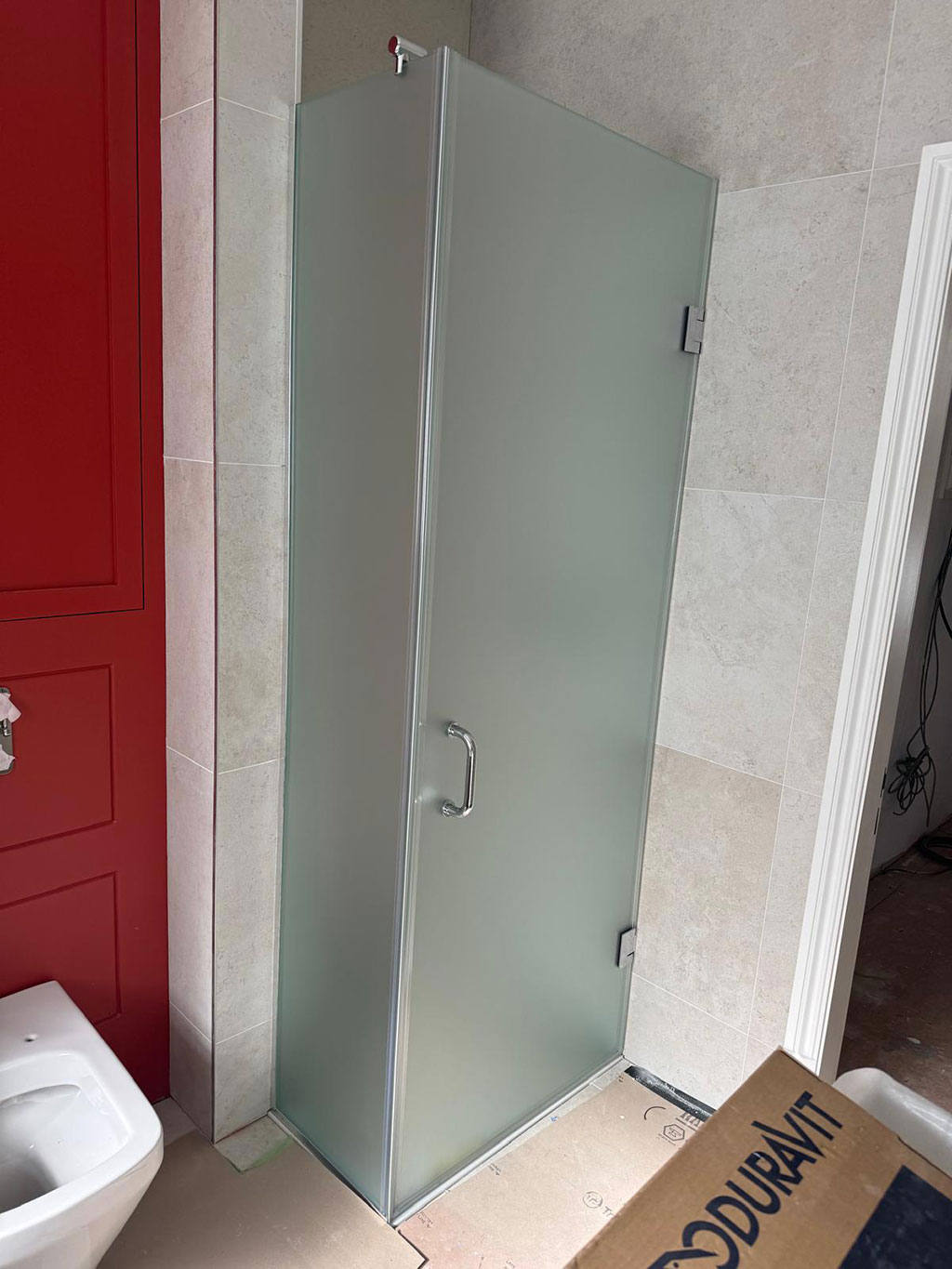
- Frosted, satin or fluted, for a screen facing a window or a WC. We have run an etched band across a loft screen to shield a freestanding bath and left the rest clear.
- Easy-clean coating, a treatment fired into the glass at the factory, not a spray you apply at home.
We won't print a price, because the same 900mm door can be two completely different jobs. But here is honestly what moves it, so you can work out roughly where yours sits before anyone comes out.
- Glass area and thickness. Glass is sold by the square metre, and 10mm costs noticeably more than 8mm. A tall panel isn't slightly dearer than a short one, it's dearer by area.
- Shape. A rectangle is the cheap case. Anything cut to a roof slope, a curved wall or a notch round a boxed pipe needs a site template, a shaped cut and a second visit before the glass is even ordered.
- Number of panels and hinges. One fixed walk-in panel on two brackets is the simplest enclosure there is. A door, a return and an inline panel is three pieces of glass and a lot more hardware.
- Hardware and finish. Chrome is the baseline. Matt black, brushed nickel and brushed brass cost more. Good hinges cost more than poor ones, and that is the last place to save money.
- Access and clearing up. A 45kg panel up a narrow second-floor stair is a different day to a ground-floor bathroom. Taking out and disposing of the old enclosure adds to it.
- Whether the room is ready. If we have to come back because the tiling or the tray isn't finished, that is a wasted visit and it shows up in the price.
The things that actually go wrong
Nearly every shower glass failure we get called to is a fixing or a hinge, not the glass. The commonest is a hinge pulling out of dot-and-dab plasterboard: 10mm of tile, then adhesive, then board, then a cavity with nothing behind it. A frameless door needs solid backing. A timber noggin put in before boarding, or a resin anchor into the blockwork. Next commonest is a door that has dropped and now catches the tray, which is a hinge adjustment rather than new glass. Third is silicone used as filler, a 15mm bead trying to disguise a leaning wall. It fails, and it goes black. And a toughened panel cannot be drilled or trimmed on site. If a hole is in the wrong place the glass is remade, which is the whole argument for measuring properly.
Hard water, and keeping the glass clear
The water across Croydon and out towards Caterham and Woldingham comes off the chalk of the North Downs, and it is hard. Limescale is what makes a two-year-old enclosure look ten. An easy-clean coating makes water bead and run instead of sitting and drying on the surface. It doesn't make cleaning optional, but it buys you years, and a squeegee after each shower does more than any bottle of product.
How the job runs
Tiling first, then us. We survey once the walls are tiled and grouted and the tray or wetroom floor is in and level, because we measure the finished surface. The survey takes half an hour or so. Made-to-order glass is usually a week to a fortnight, and you get a date at the survey rather than a guess over the phone. A door and panel is normally a half day to fit; a large walk-in or a shaped loft screen is a full day. Silicone wants about 24 hours before the shower is used. We carry the glass through the house ourselves and take the old enclosure away. While we're there, plenty of customers add a made-to-measure mirror or a glass splashback off the same visit.
Shower Enclosures across South London and Surrey
We provide shower enclosures throughout the areas below and everywhere in between. See our full areas covered page.
Frequently Asked Questions
We don't publish prices, because the same size door can double in cost depending on shape, thickness, hardware finish and access. The biggest single factor is whether the glass is a plain rectangle or cut to a slope or a curve. We price off a proper measure, not a description over the phone, so the figure you get is the figure you pay.
8mm suits doors and returns up to around 900mm, bath screens and anything supported on two edges. Go to 10mm for walk-in panels over about 1000mm, glass over 2m tall, long unsupported returns and glass-to-glass hinged doors. 10mm flexes less, so it feels solid and the door holds its position. Both are toughened safety glass either way.
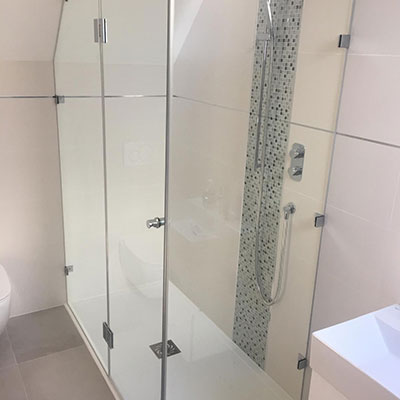
Yes, and it's a lot of what we do. The glass is cut to the rafter angle, so we template the slope on site once the tiling is done, then the panel is cut and toughened to that exact shape. It can't be trimmed afterwards, so the template has to be right. Loft bathrooms across South London and Surrey are a regular job for us.
It's the normal situation, not a fault. A standard enclosure only has around 20mm of adjustment in its wall profile, and plenty of older walls lean more than that once tiled. Made-to-measure glass is cut to the wall you actually have, so the door hangs true and the joint takes a normal silicone bead rather than a 15mm one.
The survey takes about half an hour. Toughened glass is made to order, usually a week to a fortnight depending on the shape and whether you've asked for an easy-clean coating or low-iron glass. Fitting a door and panel is typically a half day, a big walk-in or a shaped loft screen a full day. Leave the silicone about 24 hours before using the shower.
In this part of Surrey and South London, yes. The water off the North Downs chalk is hard, and limescale bonding to bare glass is what ages an enclosure fastest. The coating is fired in at the factory rather than sprayed on at home, so water beads and runs off. You still need to squeegee it, but it stays clear for far longer.
No, and nobody should. We measure the finished tiled surface, because the tiles change the opening by 10mm or more per wall and the tray or wetroom floor has to be in and level first. Book the survey once the tiler is off site and grouting is done. Measuring bare walls is the most common way a made-to-measure panel ends up unusable.
We're based at 24 Waddon Close in Croydon and cover South London and Surrey from there, including Purley, Sanderstead, Selsdon, Coulsdon, Sutton, Banstead, Reigate, Caterham, Bromley and Wimbledon. The full list is on our areas covered page. Shaped and one-off work is on one-off glass projects.